Community health promoters: the shift toward localized care
For nurses working in rural and pastoralist communities, the hardest part of care is often not the clinical decision itself.
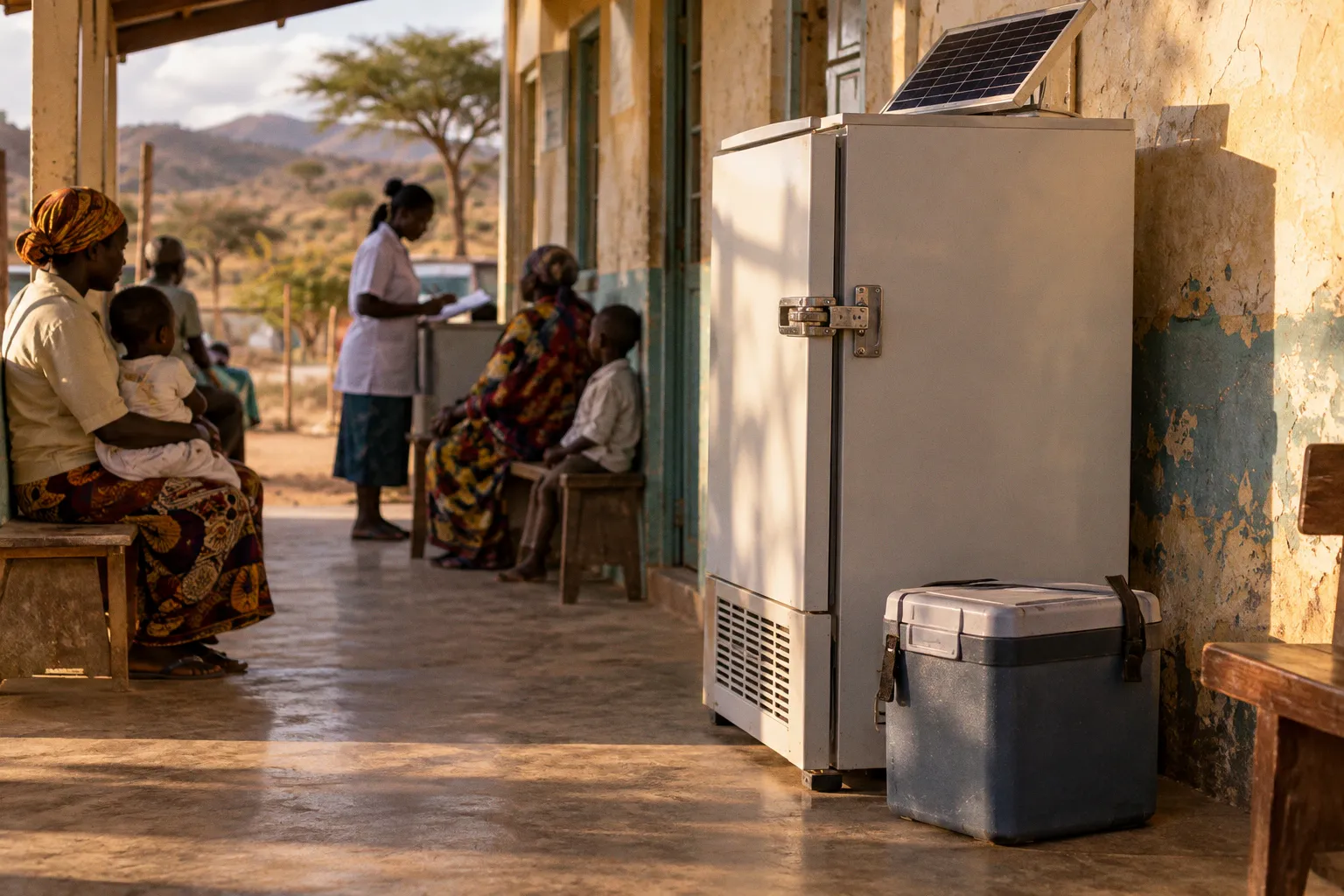
It is reaching the person who needs it before distance, migration, cost, or tradition turns a manageable health concern into an emergency.
Kenya’s expansion of Community Health Promoters (CHPs) is an attempt to meet that reality at its source. On September 25, 2023, the country launched a national initiative to equip 100,000 CHPs with standardized kits, linking them to approximately 10 million households through 10,000 Community Health Units. The model assigns roughly one promoter to every 100 households and places prevention, early identification, and health education closer to daily life.
That shift matters everywhere, but it matters most where a fixed facility cannot reliably follow the people it serves. In pastoralist regions, families may move with livestock, cross large distances between settlements, or change their route according to water, grazing, weather, and security. A clinic built around a permanent location remains necessary. It is simply not enough on its own.
The community health promoters’ role in pastoralist regions is therefore not to replace nurses, midwives, clinical officers, dispensaries, or hospitals. It is to create a living bridge between households and the formal health system—and to make that bridge strong enough to carry prevention, trust, referral, and follow-up.
The legislative shift: making prevention part of the health system
Kenya’s Primary Health Care Act of 2023 formally recognized the Community Health Promoter cadre and connected it to Primary Care Networks. This is more than a change in terminology. It places community-level work inside the architecture of healthcare rather than treating it as an informal extension of facility services.
For those of us who have worked close to the community, this distinction is important. Health education, household visits, referral support, immunization follow-up, maternal care conversations, and screening do not happen outside healthcare. They are healthcare. They simply happen in a different room—sometimes under a tree, sometimes at a homestead, sometimes along a route between settlements.
The national rollout gives this work a common foundation:
- A defined community presence: one CHP is linked to approximately 100 households, creating a practical point of contact for families that may otherwise have no regular connection with a facility.
- Standardized equipment: the kits give promoters tools to support basic primary healthcare activities rather than relying only on verbal advice.
- Integration with Primary Care Networks: the promoter’s work can connect household-level concerns with dispensaries, health centres, referral facilities, and county services.
- A preventive orientation: the model emphasizes finding risks early, supporting healthy practices, and helping people seek care before illness becomes severe.
The strength of this arrangement will depend on how consistently it is supported. The exact long-term retention rate and stipend reliability for CHPs across all 47 counties remain important questions. A community health strategy cannot be sustained by goodwill alone. Promoters need training, supervision, functioning referral pathways, supplies, transport support where appropriate, and recognition as part of the health workforce.
But the policy direction is sound. If we want primary healthcare to be preventive, it has to be present before the patient arrives at the gate of a hospital.
A community health promoter does not bring the whole hospital to the homestead. The promoter makes sure the homestead is no longer invisible to the health system.
Pastoralist mobility changes what access means
In settled communities, we often measure access by distance to the nearest facility. In pastoralist areas, distance is only one part of the problem. The more difficult question is whether services can meet people where they are moving, when they are moving, and in a form that fits the realities of family and community life.
A facility may be open, staffed, and clinically capable. Yet a mother who has moved with her household may be several days away. A child due for immunization may not be near the facility recorded in a register. A person with rising blood pressure may never describe the problem as illness until symptoms become impossible to ignore. A pregnant woman may begin antenatal care but struggle to return for the recommended visits after the family changes location.
This is why pastoralist health outreach strategies in Kenya must be mobile, relational, and continuous. A single outreach event can provide valuable services, but continuity is what turns an encounter into care.
Community health promoters can support that continuity in several practical ways:
1. Mapping households and movement patterns. Promoters know which families are present, which have moved, and which settlements or routes are difficult to reach. That local knowledge helps health teams plan outreach around real patterns rather than assumptions based on static maps.
2. Recognizing early warning signs. A promoter may identify a pregnant woman who has missed care, a child who is not feeding well, or an adult with symptoms that require referral. The promoter does not make every clinical decision; the promoter helps ensure that a concern enters the system early enough to receive one.
3. Supporting referrals. Referral is not complete when a form is written. Families may need help understanding where to go, when to go, what to bring, and why the referral matters. In communities where transport and cost are serious barriers, a trusted local health worker can make the difference between intention and arrival.
4. Following up after contact with a facility or mobile team. The household encounter after treatment can reveal whether medicines were understood, whether a mother returned for care, or whether a child’s condition improved.
5. Translating health messages into daily life. Prevention becomes useful when it is connected to water access, food availability, household responsibilities, seasonal work, and local decision-making—not delivered as a lecture detached from those realities.
The model is especially significant in counties where the formal network is spread thinly across large territory. Kajiado County covers more than 21,000 square kilometres and has 136 public health facilities. In such a setting, the number of facilities alone cannot describe access. The space between them is part of the clinical reality.
CHPs have been conducting door-to-door screening for hypertension and blood sugar using basic portable equipment in pastoralist communities. This kind of work may appear modest beside hospital technology, but it changes the timing of care. A risk identified early can be discussed, referred, monitored, and managed. A risk never identified may become a crisis that arrives late and costly.
Mobile clinics work best when they are connected to people
Mobile clinics are often described as if mobility itself solves the access problem. It does not. A vehicle, a clinical team, and a supply of medicines can reach a remote settlement once, but the value of mobile care depends on how well it is integrated with the community before, during, and after the visit.
This is where integrating community health volunteers into mobile clinics becomes essential. In Kenya’s current framework, CHPs are the local continuity around a mobile service. They can help identify households that need attention, communicate the planned visit, prepare families for screening or immunization, and support follow-up when the mobile team has moved on.
Faith-based networks add another layer to this work. The Catholic Health Department of Kenya, operating under the Kenya Conference of Catholic Bishops, works across a network spanning 28 dioceses. Its programmes have trained health providers and Community Health Promoters in preventive care, including community-level management of cardiometabolic and chronic diseases.
That network matters not only because of its reach, but because healthcare ministry is built on presence. A Catholic health service cannot define success only by the number of consultations completed. We also have to ask whether people were treated with human dignity, whether the service was understandable, whether the most isolated households were remembered, and whether the relationship continued after the outreach vehicle left.
Mobile initiatives in Wajir and faith-based mission outreach in Turkana have adapted antenatal care, childhood immunization, and diagnostic screening to nomadic routes. The practical lesson is clear: the service must travel according to the community’s movement, not insist that every community organize its life around a stationary facility.
A useful mobile clinic partnership usually has several connected parts:
| Function | Community health promoter | Mobile clinic team |
|---|---|---|
| Finding people who need care | Identifies households, missed visits, pregnancy needs, childhood concerns, and chronic disease risks | Confirms clinical priorities and prepares the service package |
| Building trust | Explains the purpose of the visit in familiar language and through existing relationships | Provides professional assessment and treatment |
| Delivering prevention | Supports health education, early screening, referral, and follow-up | Provides immunization, antenatal care, diagnostics, and clinical review |
| Maintaining continuity | Tracks what happens after the visit and alerts the referral system to concerns | Documents care and links patients to fixed facilities or further outreach |
| Understanding context | Brings knowledge of seasonal movement, family circumstances, and local barriers | Adapts clinical operations and referral decisions to that context |
The table is not a hierarchy. It is a partnership. The promoter is not merely an assistant to the visiting team, and the mobile team is not an occasional substitute for local care. Each brings a different kind of knowledge.
This is also where the ministry of presence becomes practical rather than symbolic. We walk alongside people when we return, when we explain, when we listen, and when we make sure that a referral does not disappear into the distance.
Training must prepare CHPs for the work they will actually face
The expansion to 100,000 Community Health Promoters creates a national platform, but scale alone does not guarantee quality. The community health promoter training curriculum must reflect the settings in which promoters work, particularly in arid and mobile communities.
A curriculum designed only around settled households will leave promoters underprepared for the realities of pastoralist care. Training needs to include the practical skills that shape the whole patient journey:
- recognizing urgent maternal, newborn, and childhood danger signs;
- supporting antenatal care and encouraging timely referral;
- explaining immunization schedules in ways that make sense when families move;
- conducting basic blood pressure and blood sugar screening with portable equipment;
- communicating results without causing unnecessary fear;
- understanding confidentiality and respectful consent in household settings;
- documenting encounters clearly enough for continuity across outreach teams and facilities;
- identifying when a concern exceeds the promoter’s role;
- working with community leaders without allowing social authority to silence a patient’s needs;
- responding respectfully across language, cultural, and religious differences;
- following up on referrals rather than assuming that referral equals treatment.
CHPs are not licensed medical doctors, and they should not be placed in situations where they are expected to act as fully certified clinical personnel. Clear boundaries protect both patients and promoters. A well-trained promoter knows what can be supported at household level, what needs a nurse or clinical officer, and what requires urgent referral.
Supervision is as important as initial instruction. Promoters need a reliable person to contact when a case is uncertain. They need feedback on their documentation. They need opportunities to refresh skills and discuss difficult encounters. Community work can be emotionally demanding because the promoter often sees the conditions that clinical services cannot immediately change: lack of transport, food insecurity, delayed decision-making, gender-based barriers, and families choosing between healthcare and other urgent needs.
We should not ask community health workers to carry these burdens silently. Supporting them is part of ethical care.
The best training also protects the human side of nursing. A promoter may be the first health worker to notice that an older man is withdrawing from family life, that a pregnant woman is frightened of the facility, or that a child’s illness is being interpreted only through spiritual or social explanations. These moments require clinical judgment, but they also require patience. Whole-person care begins with taking the person seriously.
Maternal health shows the cost of distance most clearly
The maternal health situation in pastoralist counties makes the stakes impossible to soften. In Wajir County, only 57% of births are attended by skilled healthcare providers, while the maternal mortality ratio is estimated at 1,683 deaths per 100,000 live births—more than five times the national average. Antenatal care coverage is also incomplete, with 45% of women reaching four or more antenatal visits.
These figures are not simply indicators of service utilization. They point to mothers navigating a chain of barriers: distance, seasonal movement, transport, household decision-making, cost, fear, previous experience, and the availability of skilled care at the time labour begins.
The community health promoters’ role in pastoralist regions is especially important before a pregnancy becomes an emergency. Promoters can encourage early antenatal contact, help families understand why repeated visits matter, identify danger signs, and connect women with mobile or fixed services. They can also help health teams see which settlements are being missed.
But we need to be honest about the limits of household-level intervention. A promoter cannot resolve a dangerous obstetric complication with education alone. Maternal survival depends on the full chain: early recognition, timely decision-making, transport, skilled birth attendance, emergency referral, functioning facilities, and respectful treatment when the woman arrives.
That is why maternal outreach should not be separated from transport planning and referral readiness. If a promoter identifies risk but the family has no realistic way to reach skilled care, the system has discovered the problem without yet solving it.
Mobile antenatal services can reduce some of the distance. They can bring check-ups, screening, counselling, and referrals closer to nomadic routes. Yet they must remain connected to facilities capable of managing complications. Mobile care is a doorway into the health system, not the whole system.
For nurses, this is where our calling becomes both practical and moral. We are asked to protect life in conditions where the safest clinical option may be geographically distant and socially difficult to reach. We cannot answer that challenge with blame. We answer it by building relationships before the crisis, strengthening referral pathways, and making each encounter useful enough to support the next one.
Prevention cannot stop at maternal and child health
The early focus of outreach in underserved communities often falls naturally on pregnancy, childhood illness, immunization, and infectious disease. These remain essential. But pastoralist communities are also living with chronic conditions that can remain undetected for years.
In Kajiado, door-to-door screening for hypertension and blood sugar demonstrates how CHPs can bring noncommunicable disease prevention into ordinary household contact. The person being screened may not have come to a clinic for a check-up. That is precisely the point.
A screening result is not a diagnosis by itself, and a promoter cannot replace clinical assessment. The value lies in identifying a possible risk and creating a path toward confirmation, counselling, treatment, and follow-up.
This work requires careful communication. A blood pressure reading can frighten someone who has never considered hypertension. A high blood sugar result can be misunderstood as a final diagnosis. Promoters need training not only in using basic equipment but also in explaining uncertainty, recommending follow-up, and preserving dignity.
Chronic disease care is especially vulnerable to disruption when families move. Patients may lose continuity of medication, miss appointments, or lack a clear record of previous findings. Better coordination between CHPs, mobile teams, and fixed facilities can help, although the precise level of real-time digital record synchronization across remote migration routes remains uncertain.
The answer is not to wait for a perfect digital system before providing care. Paper records, clear referral notes, household follow-up, and communication between teams still matter. Technology can strengthen continuity, but it cannot substitute for a person who knows where the family has gone and why the previous plan may have failed.
Scaling grassroots health interventions in arid lands will require this combination of simple tools and disciplined systems. We need appropriate equipment, but also dependable supervision. We need data, but also the wisdom to interpret it in context. We need outreach calendars, but also the flexibility to respond when communities move.
What success should look like
The success of Kenya’s CHP strategy should not be judged only by how many kits are distributed or how many household contacts are recorded. Those measures are useful, but they do not tell us whether care became safer, earlier, more respectful, or more continuous.
For pastoralist communities, we should be watching for changes such as:
- more women beginning antenatal care early and completing recommended visits where possible;
- faster recognition and referral of maternal and childhood danger signs;
- stronger attendance by skilled providers at birth;
- improved childhood immunization follow-up across mobile routes;
- more people with elevated blood pressure or blood sugar reaching confirmatory care;
- fewer households disappearing from the health system when they migrate;
- clearer communication between CHPs, mobile teams, dispensaries, and referral hospitals;
- better support and retention for the promoters carrying this work.
These outcomes require shared responsibility. County governments provide the public structure. Community health units organize local delivery. Mobile teams extend services to difficult terrain. Faith-based networks bring facilities, trained personnel, pastoral relationships, and a long tradition of serving communities that formal systems may overlook.
The Catholic health ministry has a particular responsibility here. Our work is not to impose a religious identity on every clinical encounter. It is to let our values shape how we serve: with solidarity, competent care, protection of the vulnerable, and reverence for human dignity. A health worker can honour a person’s dignity through a careful explanation, a confidential conversation, a return visit, or a refusal to dismiss a concern simply because the patient lives far away.
Localized care is not lesser care. When it is properly connected to clinical services, it is often the most realistic form of primary healthcare available.
The work ahead is partnership, not substitution
Kenya’s Community Health Promoter programme marks a significant move toward prevention and local responsibility. The national framework gives communities a clearer place in the health system, while mobile clinics and faith-based networks make it possible to carry services beyond the walls of fixed facilities.
The next challenge is to make the model durable. CHPs need meaningful training, regular supervision, practical tools, dependable support, and a voice in how outreach is designed. Mobile teams need to treat local promoters as partners who understand the terrain and the people. Hospitals and health centres need referral channels that work in both directions. Communities need to see that contact with a promoter leads somewhere—that concerns are heard, documented, and acted upon.
We should also resist the temptation to describe community health workers as a cheap solution for every gap in the system. They are a vital part of last-mile care, but they cannot compensate indefinitely for absent transport, understaffed facilities, unreliable supplies, or inadequate emergency services.
Our calling is to build a chain of care strong enough that no link is asked to carry the whole weight.
When a Community Health Promoter visits a household, screens for risk, supports a mother, follows up on a referral, or helps a family find its way to a mobile clinic, that work is both clinical and deeply human. It is a ministry of presence grounded in practical service. We walk alongside people not because the road is easy, but because health equity requires someone to keep walking when distance and mobility make the road difficult.
The shift toward localized care will be measured in policies and numbers. Its meaning, however, will be found in whether a mother reaches skilled care, whether a child receives protection before illness takes hold, and whether a person with an undiagnosed chronic condition is seen in time.
That is the work in front of us: not replacing the health system, but bringing its care closer, earlier, and with greater fidelity to the people it exists to serve.