Faith-based health financing: the shift toward outcome-based grants
Kenya’s faith-based health networks are entering a funding cycle in which institutional reputation and historic service coverage are no longer sufficient to secure external support.
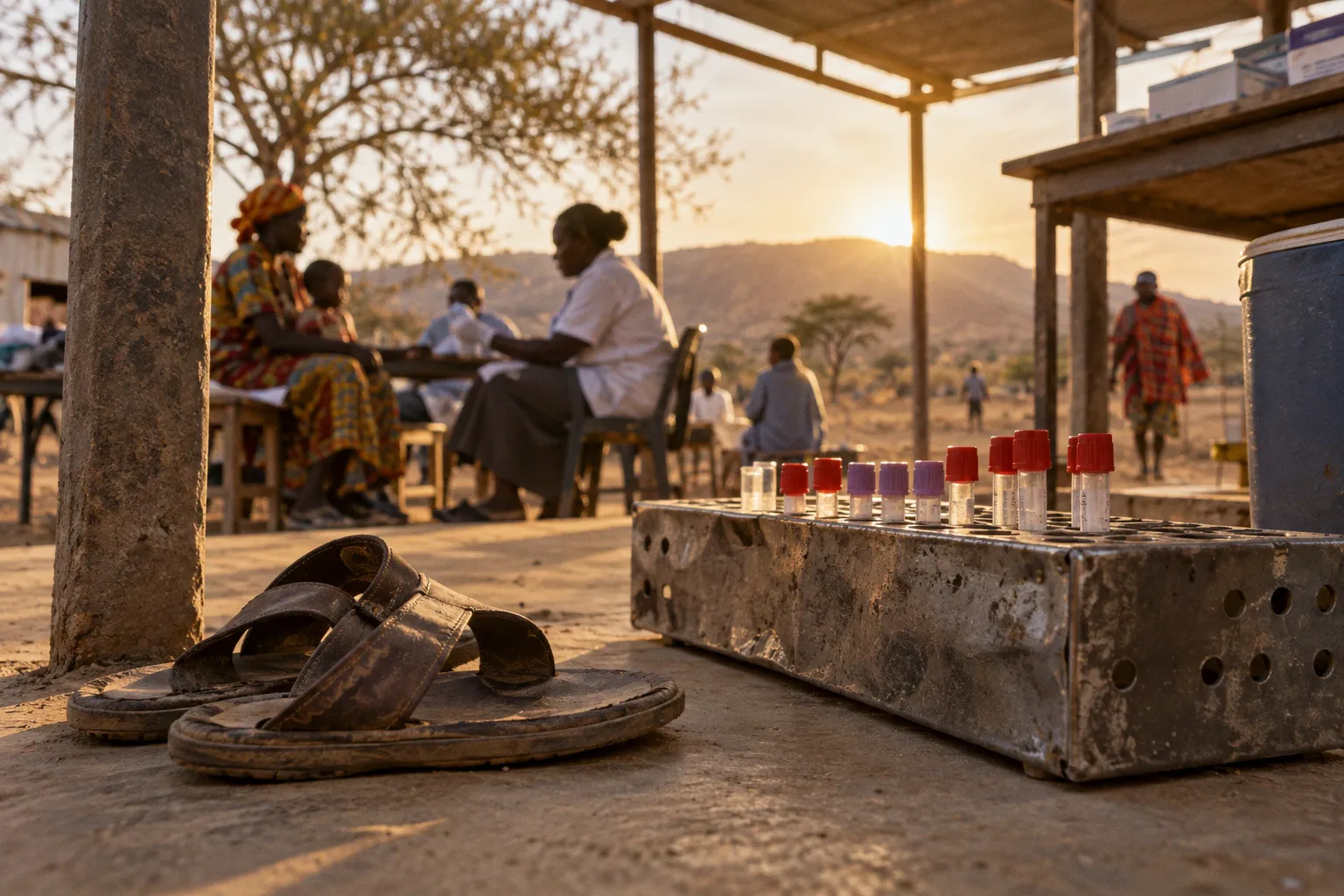
The immediate pressure is visible in two directions: international assistance has contracted sharply, while domestic reimbursement through Kenya’s Social Health Authority remains delayed and operationally difficult for many providers.
This is not a temporary cash-flow problem. It is a structural change in how funders assess faith-based health organizations, allocate multi-year grants, and define acceptable evidence of impact. The faith-based health financing shift in Kenya is moving organizations away from broad operational support and toward targeted, outcome-based, locally anchored partnerships.
Faith-based providers collectively deliver approximately 40 percent of Kenya’s health services, with a particularly significant presence in rural and vulnerable communities. Their institutional importance is therefore not in question. The funding architecture around that service delivery is.
The end of traditional aid: what changed in 2025
The 2025 reduction in U.S. foreign assistance exposed a dependency that many health networks had been managing for years: core programs were often financed through a combination of short-term grants, restricted project funding, and reimbursement streams that did not arrive on a predictable schedule.
In January 2025, executive review measures and stop-work orders disrupted international health programming. Later, in July, the U.S. Congress passed the Rescissions Act of 2025, rescinding approximately $7.9 billion in international assistance. The effect was not that all foreign funding disappeared. It was that the assumption of continuity became financially indefensible.
For Kenyan faith-based organizations, the consequences were immediate:
- Grant-funded positions and program units faced uncertainty even where the underlying community need had not changed.
- Networks had to reassess which services could be maintained through domestic revenue, which required external subsidy, and which needed a new delivery model.
- County governments and national agencies became more important as financing partners, not simply as regulatory or implementation counterparts.
- Donors began to place greater emphasis on transition plans, cost-sharing, institutional controls, and measurable outcomes.
The donor funding trends for Kenyan NGOs are therefore best understood as a reallocation of risk. Funders are less willing to carry the full cost of delivery through unrestricted or loosely defined support. They increasingly expect local institutions to demonstrate how an intervention can be absorbed into county systems, linked to public financing, or sustained through a defined revenue model.
That shift creates pressure, but it also clarifies the strategic question for health leaders: what part of the organization is genuinely grant-dependent, and what part can be redesigned for long-term institutional resilience?
The central funding question is no longer whether a mission hospital is valuable. It is whether its value is organized into a fundable, measurable, and locally sustainable proposition.
From operational support to performance metrics
Traditional grant proposals often began with an institutional description, a statement of need, and a request to finance personnel, equipment, outreach, or general program operations. Those elements remain relevant, but they no longer carry a proposal on their own.
The new grant landscape is organized around a chain of accountability:
1. A defined population and service gap. The organization must specify whom it serves, where the gap exists, and why the faith-based network is positioned to respond.
2. A measurable intervention. The program needs a clear description of what will change in practice, not merely what activities will take place.
3. An implementation pathway. Donors want to see which institution owns the work, which partners contribute, and how decision rights are distributed.
4. A credible outcome framework. The proposal must show how progress will be tracked and how the results will inform funding decisions.
5. A transition or sustainability mechanism. Even a successful grant must answer what happens after the grant period.
This is the difference between funding activity and funding capacity. A proposal that lists workshops, staff deployments, procurement, or community engagement without showing the institutional result will be treated as a delivery plan, not a strategic investment.
For Catholic health networks, this distinction is particularly important because their comparative advantage often lies in distributed infrastructure: hospitals, dispensaries, religious congregations, community workers, diocesan structures, and long-standing relationships with local authorities. These assets can support a strong funding case, but only if they are translated into an operating model that a donor can evaluate.
A funder may be interested in workforce development, early childhood development, rural access, maternal and child services, data systems, or local management capacity. The organization’s task is not to present every activity it performs. It is to identify the narrow institutional capability that the grant will strengthen and then connect that capability to a result that matters to communities and public systems.
What outcome-based funding changes internally
Outcome-based grants require a different internal conversation. Program, finance, monitoring, and institutional advancement teams cannot work as separate functions that meet only at proposal deadlines. Their responsibilities overlap.
A program team may define the service model, but finance must establish the cost structure. Monitoring staff may select indicators, but operations must determine whether the data can be collected without creating an unsustainable reporting burden. Leadership may approve the strategic direction, but county and public-sector partners must have a realistic role in implementation.
This is where stakeholder alignment becomes a funding asset rather than a procedural exercise. A donor is more likely to support a program when the proposal demonstrates that the organization has already reconciled its internal assumptions.
For example, a credible funding package should be able to explain:
- Which costs are direct program expenses and which represent shared institutional capacity.
- Which outcomes can reasonably be attributed to the intervention during the grant period.
- Which indicators are already captured through routine systems and which require new investment.
- How county officials, facility leaders, and community structures will participate.
- What level of co-financing or in-kind contribution is realistic.
- How the organization will respond if public reimbursement or referral volumes fall below forecast.
These are not technical additions to a narrative proposal. They determine whether the proposed program can survive contact with the operating environment.
The SHA transition: liquidity is now a strategic issue
Kenya’s move from the National Health Insurance Fund to the Social Health Authority under the Social Health Insurance Act of 2023 created a new institutional framework for public health financing. By late 2024, more than 12.7 million Kenyans had registered under SHA as part of the government’s broader Bottom-Up Economic Transformation Agenda.
For faith-based facilities, however, registration growth does not automatically translate into reliable cash flow. The operational question is whether services delivered to eligible patients are documented, authorized, processed, and reimbursed within a timeframe that allows facilities to meet payroll, procure supplies, maintain infrastructure, and continue serving populations with limited alternatives.
In February 2026, faith-based health providers called for the release of more than 10 billion Kenyan shillings in delayed disbursements owed under SHA and the former NHIF. That figure illustrates the scale of the liquidity challenge facing the sector. It also shows why donor strategy cannot be separated from reimbursement strategy.
A grant can support transition, systems strengthening, or targeted service delivery, but it cannot be treated as a substitute for a functioning domestic financing channel. When organizations use philanthropic funding to cover reimbursement delays indefinitely, the grant becomes a hidden operating subsidy. That may protect services in the short term, but it weakens the organization’s ability to present a sustainable financial model in the next funding cycle.
I recommend that boards and executive teams separate three categories of financial need:
| Financial category | Appropriate funding logic | Strategic question |
|---|---|---|
| Reimbursement delay | Bridge financing, where available, with a defined recovery plan | When and how will the outstanding public payment be converted into operating cash? |
| Capacity building | Multi-year philanthropic or institutional grant support | Which system, capability, or management function will remain stronger after the grant ends? |
| Structural operating gap | Blended financing, cost redesign, public partnership, or service restructuring | Is the gap temporary, or does it reflect a model that cannot sustain current commitments? |
This distinction matters in donor negotiations. Funders may support a financial management upgrade, claims administration, digital reporting, or county integration. They are less likely to support an indefinite gap that has no resolution pathway.
The most resilient organizations will treat SHA engagement as part of institutional advancement. That means maintaining accurate claims and service data, documenting the public value of facilities, participating in sector consultations, and building relationships with county authorities that can support both reimbursement resolution and future partnership design.
County mentorship and the return of local ownership
The response from networks such as the Christian Health Association of Kenya points toward a more durable approach. CHAK has implemented a county mentorship and transition model designed to help local county governments manage and finance health programs independently.
This model reflects a major change in the role of a national faith-based network. Instead of presenting itself primarily as the long-term executor of donor-funded activities, the network becomes a platform for institutional transfer: it helps counties develop the planning, budgeting, coordination, and implementation capacity required to carry responsibility forward.
That is a stronger proposition for current funding cycles because it addresses the donor concern that projects remain dependent on external management. It also recognizes a practical reality: county governments are not simply future recipients of program results. They are essential stakeholders in whether the results can be sustained.
A county mentorship model can include several layers of work:
- Aligning program objectives with county health plans and budget cycles.
- Training county teams to interpret program data and make allocation decisions.
- Establishing clear responsibilities between county departments, faith-based facilities, and community structures.
- Supporting financial and administrative systems that can absorb external investment.
- Creating transition milestones that show when the county assumes a greater share of management or financing.
- Retaining a defined role for the faith-based network where it provides specialized institutional capacity.
The strategic value is not limited to one grant. A county that can demonstrate effective coordination becomes a stronger partner for multiple funders. A faith-based organization that can show successful transfer of responsibility becomes more credible in proposals focused on systems strengthening, localization, and public-private health partnerships in Kenya.
However, local ownership should not become a rhetorical substitute for budget authority. A proposal may state that county governments will sustain a program, but the funding case is incomplete unless it identifies the relevant planning mechanism, responsible unit, budget pathway, and transition timetable. The quality of the partnership depends on these operational details.
Building the case for private-public health partnerships
The current environment favors partnerships that combine institutional trust, public mandate, and private capital. Yet partnership language is often used too loosely. A memorandum of understanding, a referral relationship, or a donor-funded activity does not by itself constitute a sustainable financing model.
A meaningful private-public health partnership should establish how value and responsibility are shared. The public side may provide policy direction, data access, reimbursement, personnel, or budget allocation. The faith-based organization may provide facilities, management expertise, community reach, specialized staff, or an established service platform. A philanthropic funder may finance the transition cost, innovation, or capacity building that neither partner can absorb immediately.
The financial architecture should answer four questions:
1. What is each party contributing?
Contributions may be cash, personnel, infrastructure, data, technical assistance, or access to a defined population.
2. What risk is each party carrying?
If reimbursement is delayed, if enrollment is lower than expected, or if implementation costs rise, the agreement should not leave the risk undefined.
3. What outcome triggers continuation or expansion?
The partnership needs a decision point, not only an activity schedule.
4. What remains after external funding ends?
A grant-funded structure that cannot be integrated into county planning or organizational revenue is not a transition model.
This is also where Catholic health organizations can use their mission identity with greater precision. The strongest case is not an appeal based on affiliation alone. It is the combination of mission, reach, accountability, and institutional discipline. A Catholic facility may have a distinct role in serving communities that public or commercial providers do not reach easily, but that role must be represented through evidence of access, continuity, management capacity, and partnership readiness.
Mission is a reason to invest. It is not a substitute for investment logic.
Targeted philanthropy is still active—and more selective
The contraction in U.S. assistance should not be mistaken for the end of international philanthropic engagement. Private foundations continue to make substantial, targeted grants to Catholic organizations working in Kenya and across East Africa.
The Conrad N. Hilton Foundation, for example, awarded Catholic Relief Services a three-year, $5.4 million grant in late 2024 to strengthen early childhood development and sisterhood networks across East Africa. The grant is significant not merely because of its value, but because it illustrates the direction of private philanthropy: defined thematic priorities, institutional capacity building, multi-year horizons, and a clear expectation that networks can extend impact beyond a single facility or project.
The implication for Catholic health donor partnerships is straightforward. Organizations should not approach private foundations with a generic request to preserve previous operations. They should identify where their network structure creates leverage.
That leverage may include:
- A religious congregation or diocesan network that can extend a model across multiple counties.
- Existing leadership structures that can support workforce development and supervision.
- Community trust that improves participation in early childhood, prevention, or social support programs.
- Facilities that provide a platform for county collaboration.
- Administrative systems capable of managing restricted funds and reporting against outcomes.
- A transition model that allows local institutions to assume responsibility over time.
The impact of philanthropic grants on mission hospitals will increasingly depend on whether the grant strengthens the institution beyond the funded activity. A donor may finance a program, but the organization should be seeking improvements in data quality, budgeting, leadership pipelines, partnership management, and internal decision-making that remain useful after the award closes.
Capacity building must be specific
Capacity building is now one of the most common terms in grantmaking, and one of the least useful when left undefined. It can refer to financial controls, leadership development, monitoring systems, governance, workforce planning, digital infrastructure, procurement, or county coordination. Each requires a different budget, timeline, and evidence base.
A credible proposal should identify the capability gap in operational terms. For example:
- The organization cannot consolidate facility-level financial data quickly enough to make funding decisions.
- County partners lack a shared process for reviewing program performance and adjusting budgets.
- Facility managers are not equipped to forecast reimbursement-related liquidity needs.
- The network has service data but cannot translate it into a consistent outcome narrative for funders.
- Leadership succession and supervision systems are too dependent on a small number of individuals.
These are fundable problems because they can be diagnosed, addressed, and measured. A broad statement that the network needs institutional strengthening is not.
What health leaders should do before the next funding cycle
The new NGO health funding landscape in Kenya rewards institutions that begin preparation before a call for proposals is published. By the time a donor announces a deadline, the most important strategic decisions should already have been made.
I recommend a disciplined preparation process:
1. Map every major funding stream against its real function.
Separate donor grants, SHA or NHIF receivables, user fees, diocesan support, facility-generated revenue, and in-kind contributions. Do not allow a temporary grant to appear as recurring income in the institutional forecast.
2. Build a funding-cycle calendar linked to public planning cycles.
Foundation deadlines, county budget processes, SHA engagement, board approvals, audits, and program reporting should sit in one institutional calendar. Strategic allocation is impossible when each department manages its own timetable.
3. Create an outcome architecture before writing the narrative.
Define the result, the indicators, the baseline, the responsible data owner, and the decision that will follow from the evidence. This prevents monitoring from becoming a reporting exercise disconnected from management.
4. Quantify the transition requirement.
If the aim is county ownership, specify the cost of mentoring, system integration, staff time, data strengthening, and handover. A transition plan without a transition budget is an aspiration.
5. Prepare for reimbursement volatility.
Model delayed public payments, lower-than-expected enrollment, and changes in service utilization. The board should know which activities can be protected, slowed, or redesigned before a liquidity crisis forces the decision.
6. Package the institution for partnership, not only for grant receipt.
Maintain current organizational documents, audited financial information, governance records, facility data, safeguarding policies, and evidence of prior implementation. Donor confidence is built through administrative readiness as much as through program ambition.
7. Position mission as an operating advantage.
Explain how Catholic identity produces practical value: trusted access, long-term presence, network reach, ethical governance, community relationships, or the ability to coordinate across institutions. Avoid reducing mission to a general statement of compassion.
The objective is not to chase every available grant. It is to establish a portfolio in which each funding source has a defined role and does not conceal an unresolved weakness elsewhere in the model.
The strategic position of faith-based health networks
Kenya’s faith-based providers remain indispensable to the country’s health system, particularly in communities where geographic access, staffing limitations, and public-sector capacity create persistent gaps. Their approximate 40 percent share of national health service delivery gives them substantial negotiating relevance.
But scale alone will not secure the next generation of funding. Donors, counties, and public financing institutions are asking a more exacting question: can faith-based networks convert reach into measurable public value while reducing long-term dependence on external operating support?
The answer will depend on institutional execution. Networks must strengthen financial visibility, connect program design to county priorities, manage SHA exposure, and use philanthropic grants to build capabilities that survive the funding cycle. They must also become more selective, because strategic focus is now a condition of credibility.
The faith-based health financing shift in Kenya is therefore not simply a move from one donor category to another. It is a redesign of the relationship between mission hospitals, public agencies, counties, foundations, and the communities they serve.
My analysis is that organizations which treat this moment only as a loss of foreign assistance will remain reactive. Those that treat it as a restructuring of the financing model can emerge with stronger local partnerships, clearer accountability, and a more defensible institutional position. The next funding cycle will favor the latter—not because the needs are greater, but because the funding case is better organized.