Grants & Partnerships: common mistakes to avoid
For a Catholic health network in Kenya, a grant can be clinically sound and still miss its mark.
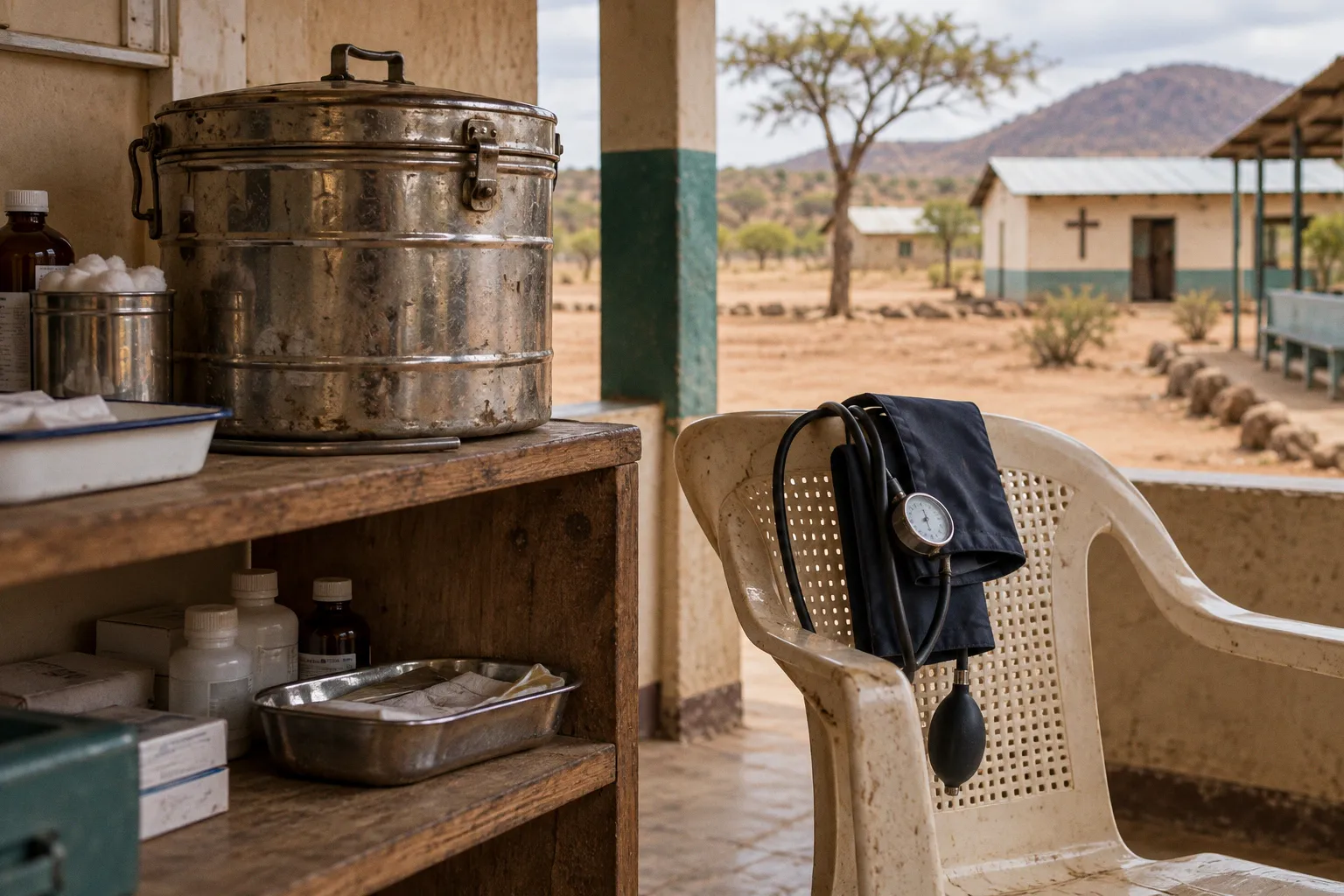
Funders assess more than the need a programme addresses: they look for a clear fit with their priorities, credible financial controls, and governance documents that let them move from interest to due diligence. That is why learning how to check common mistakes to avoid in a grant application begins well before the final draft.
A weak fit is one frequent reason proposals are rejected, alongside gaps in financial management and compliance. These problems can be hard to spot from inside an organisation. A team may know exactly why a maternal health programme matters locally, for example, while the funder is looking for work that fits a different stated priority. The task is not to make every project sound fundable. It is to find the right match, and to show that the organisation can manage the grant if it comes.
Strategic Misalignment: Why Funder Priorities Matter More Than Project Scope
A proposal can describe a worthwhile intervention, have experienced staff, and still be poorly matched to the funder receiving it. Misalignment is a frequent reason for rejection: the project’s purpose, geography, population, or proposed activities do not fit the funder’s published strategy or application guidelines.
Grant seeking is sometimes treated as a writing exercise. In practice, it is also a matching exercise. A foundation’s priorities and eligibility requirements help define which proposals it can consider. If an application mentions those priorities but the actual work does not advance them, changing a few phrases will not fix the underlying mismatch.
For a Catholic health network, the first question is not simply whether a project addresses an urgent need. It is whether that need and the proposed response fit the funder’s current programme. A maternal health initiative may be essential to a community, but a funder whose strategy focuses on a different population or type of intervention may not be in a position to support it.
A strong proposal cannot make a funder’s priorities fit a project. The match has to be real before the writing begins.
A practical way to assess fit is to read the funder’s strategy alongside its current application guidance, rather than relying on an older call, a past award, or an informal impression of what the organisation supports. Then compare the project itself with the funder’s stated focus:
- Does the funder support the applicant’s organisation type, location, and legal status?
- Does the proposed work address a priority the funder has explicitly identified?
- Do the activities and intended outcomes belong within that priority, or is the connection mostly rhetorical?
- Are the requested costs and grant duration compatible with the funder’s published terms?
If the answer is no, the better decision may be not to apply. Reworking a project to appear aligned can weaken its logic and create expectations the organisation cannot deliver. A genuine fit lets the applicant explain, in plain terms, why this funder is appropriate for this work.
Financial Management Hurdles in Multi-Donor Environments
Managing several grants at once creates a practical challenge: each funder may expect financial information in a different format, while the organisation still needs one reliable account of what was spent and why. When programme records, accounting records, and donor reports do not reconcile, a technically sound project can become difficult to oversee.
A common problem begins with separate systems. Programme staff describe expenditure by activity; finance staff record transactions using the organisation’s chart of accounts; the donor wants costs presented under its own categories. Those formats need not be identical, but the organisation must be able to trace a reported amount back to its underlying transaction and project activity.
That traceability matters when a funder asks for clarification or an audit examines the grant. A budget that does not reflect the work plan, or a report that cannot be reconciled with the ledger, can raise questions about control even if the spending itself was appropriate.
Some recurring pressure points are:
1. The budget and narrative describe different work. Each significant cost should have a clear activity or operational purpose in the proposal.
2. Shared operating costs are left out or treated inconsistently. Rent, utilities, and core staff time may be necessary to deliver a project. Whether a donor will fund them depends on its rules, so eligibility should be confirmed rather than assumed.
3. Budget lines are too broad or too fragmented. A budget that hides meaningful differences between costs is hard to monitor; one with excessive detail can be difficult to reconcile and explain.
4. Currency assumptions are not stated. When a grant is budgeted or reported in a currency different from the one used to pay expenses, the organisation needs a consistent way to document exchange-rate treatment and resulting variances.
5. Indirect costs are not supported by a clear basis. The proposed recovery rate should be handled in line with the funder’s rules and the organisation’s documented cost approach, not chosen without explanation.
The answer is not necessarily a new software platform. It may be a clear mapping between the organisation’s accounts and each donor’s reporting format, agreed responsibilities between finance and programme teams, and a regular reconciliation process. Before submission, the two teams should review the budget together: programme staff can confirm that activities are realistic, while finance staff can test whether the costs can be recorded, allocated, and reported as proposed.
For networks with limited administrative capacity, this work competes with direct programme needs. But an application that promises careful financial management must be supported by a process the organisation can sustain. A smaller, well-controlled grant may be more responsible than a larger award whose reporting requirements exceed the team’s capacity.
The Governance Gap: Compliance and Documentation as Funding Drivers
Governance documents rarely tell the story of a programme. They can, however, determine whether a funder is able to assess it. Depending on the donor and the organisation’s legal status, due diligence may involve audited financial statements, board information, policies on fraud or conflicts of interest, and documentation about partners or sub-grantees.
The exact requirements vary. Some funders ask for particular documents at application; others request them during due diligence. Applicants should confirm what is required, who must approve it, and whether each document is current. An otherwise promising proposal can stall if a required policy is missing, an audit is overdue, or the organisation cannot provide evidence of its governance arrangements.
It helps to separate documents that demonstrate formal compliance from those that show how controls operate in practice. A policy may exist on paper, but the organisation should also know who is responsible for implementing it and how concerns are raised or reviewed. For a community health programme delivered with local partners, the same clarity is needed around partner selection, fund flow, monitoring, and reporting.
Governance is easiest to overlook when everything is going well. Funders often need to see it most clearly before the work begins.
A manageable system keeps core records together and assigns responsibility for maintaining them. Board minutes, declarations of interest, audit documents, policy approvals, and partner records should not depend on one staff member’s memory or personal filing system. This is particularly important when grant management is shared across a central office, diocesan structures, health facilities, and community organisations.
Reporting also forms part of this picture. Consistent financial and programme reports help a funder understand what the organisation did with previous support. They also help the organisation explain delays, changes, or lessons without reconstructing the project from scattered files. Repeat funding is never automatic, but reliable records make it easier for a donor to assess whether the organisation has managed earlier commitments responsibly.
Navigating Invitation-Only Landscapes: Lessons from the Hilton Foundation Model
Not every foundation invites unsolicited applications. Some use proactive, invitation-based grantmaking, which changes how an organisation should approach funding. The Conrad N. Hilton Foundation, for example, describes a grantmaking model organised around strategic initiatives and generally does not operate like a conventional open-call funder. Its work includes areas such as Catholic Sisters, Safe Water, and Global Early Childhood Development.
For a Kenyan Catholic health network, the relevant question is not simply how to get an application form. It is whether the organisation’s work fits an initiative and whether the foundation’s process provides an appropriate route to engagement. An invitation-only model is not a reason to send an unsolicited proposal and hope it will be considered. Nor does it mean that a network should abandon open calls from other funders.
| Strategic initiative area | Possible area of fit to explore | What an applicant should establish |
|---|---|---|
| Catholic Sisters | Work connected to the health, leadership, or community role of Catholic Sisters | Whether the proposed activities align with the initiative’s current priorities and eligibility |
| Safe Water | Community water access, sanitation, or related health work | Whether the intervention and location fit the funder’s current strategy |
| Global Early Childhood Development | Services supporting young children and caregivers | Whether the proposal addresses the initiative’s intended outcomes and target population |
| Other initiatives | Depends on the foundation’s current strategy | Whether the organisation has a credible route to engagement and a genuine programme fit |
A foundation’s areas of interest can change, and a category name alone is not evidence that a particular project qualifies. Applicants should use the funder’s current public information to understand its approach, then decide whether a conversation is appropriate. Where there is no open call, relationship-building should be grounded in a clear institutional case: what the organisation does, whom it serves, and why that work may be relevant to the funder’s strategy.
That kind of engagement takes time and should not be confused with application discipline. Maintaining a thoughtful relationship with a potential funder does not replace strong budgeting, documentation, or a clear programme design. The two tracks support one another, but neither can compensate for a weak fit.
Building Sustainable Reporting Systems for Long-Term Grant Success
A reporting system is more than a template or a software purchase. It is the set of habits that lets an organisation explain, throughout a grant, what it planned, what it delivered, what it spent, and what changed. If those records are assembled only when a report is due, the process becomes harder and the account less reliable.
The simplest useful systems connect programme and finance records to the same work plan. Project staff should know which outputs and outcomes they are expected to document; finance staff should know how grant costs are coded and allocated. Someone must be accountable for bringing those records together, checking inconsistencies, and raising problems while there is still time to address them.
Three foundations help:
- A consistent financial record. The chart of accounts and supporting documentation should make it possible to identify grant expenditure and map it to the donor’s reporting categories.
- A practical programme tracking method. Indicators should be recorded as the work proceeds, with responsibility assigned to staff who can access the information.
- A learning record for future proposals. Rejections, donor questions, reporting challenges, and changes to project delivery can inform the next funding decision.
A reporting process also needs to survive staff turnover. That means storing files in an accessible, organised location; documenting handovers; and avoiding systems that only one person knows how to use. For organisations working through multiple facilities or community partners, it also means agreeing what information must be collected, how it will be shared, and how missing or delayed records will be handled.
When something changes during implementation, early communication is usually more useful than a polished explanation at the reporting deadline. A delayed activity, a change in local conditions, or a variance in spending may require discussion with the donor, depending on the grant terms. Good records help the organisation describe the change and its response without overstating what has been achieved.
Learning from an unsuccessful application matters too. Rather than treating rejection as a verdict on the organisation, teams can review whether the funder was a genuine match, whether the proposal answered the stated requirements, and whether its budget and governance materials were clear. This is not a guarantee of future funding. It is a way to make the next decision better grounded than the last.
For Catholic health networks in Kenya, avoiding common grant mistakes is ultimately a matter of institutional discipline: pursue funders whose priorities genuinely fit the work, build budgets that can be managed and explained, keep governance records current, and report as the programme unfolds. Those practices do not make every application successful. They do make an organisation a more credible steward of the funding it seeks.