Enhancing Chronic Care Safety and Cervical Cancer Screening Across Kenya
For nurses caring for people with chronic illness, the work of keeping care safe often happens in small, repeated moments: checking what a patient understands, noticing a concern, and helping them take the next step.
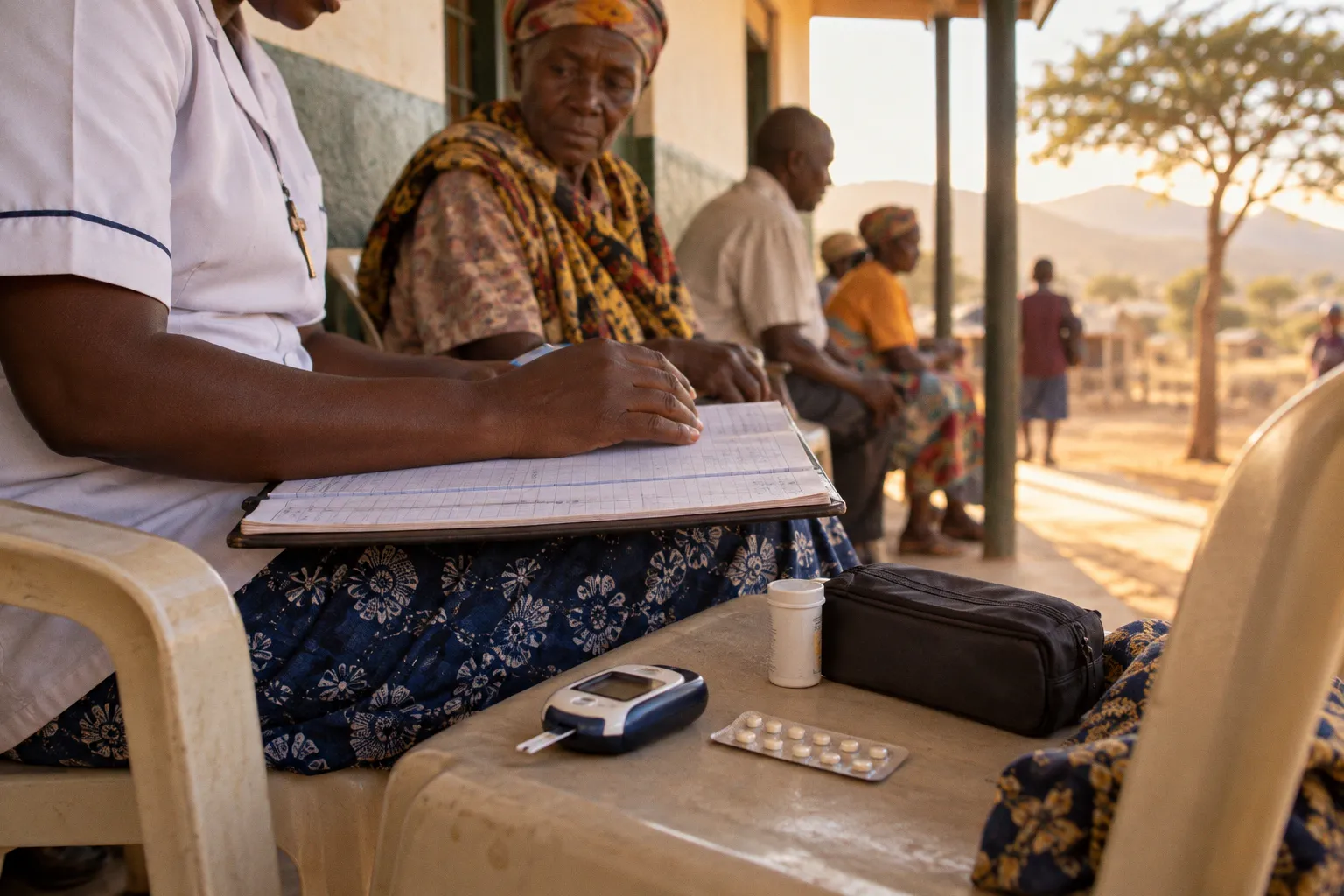
The World Health Organization’s Africa office reports that Kenya is working with WHO and local partners to strengthen chronic-care safety and introduce HPV DNA screening for cervical cancer. The effort brings two practical parts of whole-person care into focus: safer support for noncommunicable diseases and screening within primary healthcare.
Safety is part of chronic care
The initiative was announced in connection with World Patient Safety Day. Its stated aim is to improve safety in chronic care and address premature mortality from noncommunicable diseases across primary healthcare touchpoints.
For patients, that focus matters because chronic care is not a single encounter. It depends on people being able to keep engaging with services over time. For nurses, the ministry of presence is often expressed through that continuity: making space for questions, helping patients understand available care, and treating each concern with dignity.
The available report does not specify which safety practices are changing, where the work is being rolled out, or how outcomes will be measured. Those details will matter in understanding what the initiative means in practice for patients and frontline teams.
HPV DNA screening joins the effort
The report also says Kenya and its partners are deploying high-performance HPV DNA screening for cervical cancer. It does not provide details on eligibility, access, costs, locations, or follow-up after a result.
That leaves important questions for patients and the clinicians walking alongside them. Where will screening be offered? How will people learn whether it is appropriate for them, and what support will be available afterward? The source does not answer those questions, so patients should seek current guidance from the clinic providing their care rather than assume the service is available everywhere.
What nurses and communities can watch for
The announcement connects chronic-care safety and cervical cancer screening under a wider effort to address noncommunicable diseases through primary healthcare. But the practical test will be whether people can access clear information and follow-up, and whether local care teams have the support to deliver services safely.
For nurses, this is familiar ground: good care is not only about a new screening approach or a system-level commitment. It is also about how we explain choices, respond to uncertainty, and protect human dignity in the everyday encounter. As more details emerge, we can help patients ask what is offered locally, what happens next, and whom to contact for guidance—small acts that make a public-health effort more tangible at the bedside and in the community.