NHIF accreditation steps for mission dispensaries in Kenya
For a mission dispensary, NHIF accreditation is not simply a registration exercise.
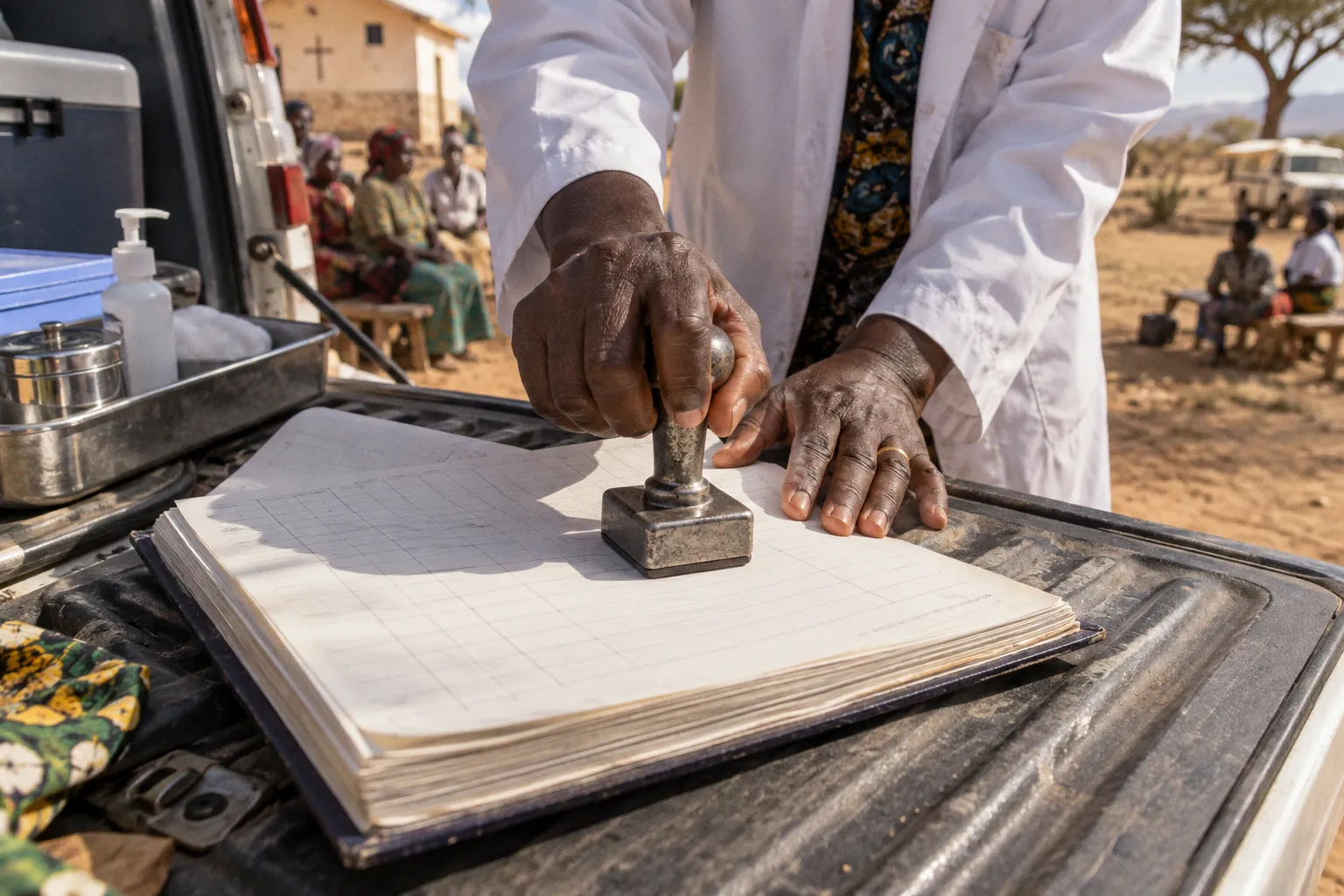
It is the point at which a small, often rural facility must demonstrate that its ministry of care can also meet the formal expectations of Kenya’s health financing and regulatory system.
That work can feel heavy when the dispensary is already managing staff shortages, medicine gaps, transport challenges, and patients who may have travelled for hours to seek treatment. Yet accreditation is not separate from our calling. It is one of the practical ways we protect continuity of care, strengthen accountability, and make sure that a patient who comes through the dispensary door is treated with both human dignity and professional discipline.
The NHIF accreditation process for mission dispensaries follows a sequence: regulatory licensing, formal application, inspection, gazettement, and contract signing. The order matters. A facility that submits an application before its licensing file is complete may create delays that have little to do with the quality of its clinical work.
For Catholic and other faith-based facilities, the strongest preparation brings together two forms of stewardship: the stewardship of people and the stewardship of systems.
Accreditation begins before the NHIF application
The first stage is not the NHIF form. It is the facility’s regulatory readiness.
Mission dispensaries must obtain the relevant licences from the responsible regulatory authorities before they can proceed with accreditation. Depending on the services offered and the professional structure of the facility, this may include licensing requirements associated with the Kenya Medical Practitioners and Dentists Council and inspection by the County Director of Health or a Joint Health Inspection Team.
This is where the distinction between a mission facility and an informal community point of care becomes important. A dispensary may be supported by a parish, religious congregation, diocese, or charitable organisation, but its faith identity does not remove the need to meet public regulatory standards. Compassion is not a substitute for licensing, and good intentions do not replace safe systems.
That is not a criticism of mission work. It is a recognition of what our patients deserve.
A nurse working in a remote dispensary may know every family in the surrounding villages. The sister in charge may have spent years building trust with mothers, older people, and people living with chronic illness. Those relationships are precious. But they must sit alongside proper professional documentation, facility standards, staffing arrangements, infection prevention practices, and a clear line of accountability.
Before preparing the accreditation application, the facility leadership should bring the following areas into one working file:
- The current facility licence and any supporting regulatory approvals.
- Professional registration and licensing records for the relevant clinical staff.
- The facility’s ownership and management information, including the responsible faith-based organisation.
- Records that demonstrate the services the dispensary is authorised to provide.
- Inspection reports and evidence that identified gaps have been addressed.
- Internal policies for patient records, medicines, referrals, infection prevention, and complaints.
- A named person responsible for coordinating the accreditation process.
This file is not administrative decoration. It is the institutional memory of the dispensary. When leadership changes, when a sister is transferred, or when a new nurse takes responsibility for the facility, a complete file prevents the work from beginning again from the ground up.
Accreditation is not a verdict on the worth of a mission. It is a discipline that helps the mission remain safe, visible, and accountable to the people it serves.
Preparing the NHIF Health Facility Registration Form 3
The formal application includes the NHIF Health Facility Registration Form 3, completed together with the required supporting licensing documents.
The form should be treated as a professional representation of the dispensary. Names, registration details, ownership information, service descriptions, and facility addresses need to match the official records held by the relevant authorities. Small inconsistencies can become large sources of delay when an application moves between a mission office, county health officials, inspectors, and the insurer.
In many faith-based networks, the person who knows the facility best is not the person completing the form. A nurse may understand the daily patient flow, while a diocesan health coordinator holds the ownership documents and an administrator keeps the licensing records. That is why the application should be prepared as a team rather than left to one person working in isolation.
A useful internal process has three stages:
1. Collect the documents before entering the final application details.
Do not rely on memory for licence numbers, official names, or dates. Gather the original records and current copies first.
2. Cross-check the application against the regulatory file.
The facility name, location, ownership, service level, and responsible officers should be consistent across the form and the supporting documents.
3. Keep a complete copy of what was submitted.
The dispensary should retain the completed form, attachments, correspondence, and any acknowledgement of submission. If questions arise later, the team should be able to see exactly what was provided.
For a rural mission clinic, this documentation may require coordination across distances. The facility may be several hours from the diocesan office, and internet connectivity may be unreliable. That reality should shape the preparation. Scan and store documents where possible, but also maintain a secure physical file. Digital access is helpful; it is not a substitute for a reliable paper trail.
The file should be protected because it contains personal and institutional information. It should not be left in an open treatment room or passed casually between staff. Good records are part of whole-person care: they protect the patient, the nurse, the facility, and the wider ministry.
The inspection is a conversation about the whole facility
After the application, the facility is inspected against the required standards. This may involve the County Director of Health or a Joint Health Inspection Team. Inspection is not limited to whether the dispensary has a signboard and a functioning consultation room. It examines whether the facility can provide care in a safe, consistent, and accountable way.
The most productive approach is to prepare for inspection as though we are preparing the dispensary for the next patient—not for a performance staged only on the day officials arrive.
Inspectors may look at the relationship between the physical environment and the clinical service. They may review the organisation of patient flow, cleanliness, infection prevention, medicine storage, record keeping, equipment, staffing, referral arrangements, and the general readiness of the facility. The exact findings will depend on the facility and the applicable standards, but the principle is straightforward: the dispensary should be able to show that its daily practice is controlled rather than improvised.
A simple internal walk-through can reveal issues that are easy to miss during a busy shift:
- Is the patient reception area organised so that privacy is respected?
- Are consultation and treatment spaces clean, functional, and used for their intended purpose?
- Are medicines stored in a way that supports safe handling and stock control?
- Can staff retrieve patient records without confusion or unnecessary exposure of confidential information?
- Are referral pathways known to the team, including where patients are sent when the dispensary cannot safely manage their needs?
- Are staff roles clear when the facility is busy or the person in charge is absent?
- Are infection prevention supplies available where care is actually delivered, rather than locked away in a distant store?
- Can the facility explain how it responds to complaints, adverse events, and urgent clinical concerns?
These questions are not about creating a polished impression. They are about whether a patient receives the same basic standard of care on a quiet Tuesday and during a crowded market-day morning.
Quality standards must live in routine practice
Kenya’s Kenya Quality Model for Health provides a framework for assessing health facilities. For a mission dispensary, quality should not become a separate project that appears only when an inspection is approaching. It should be woven into handovers, stock checks, cleaning routines, patient education, referrals, and supervision.
This is where nursing leadership makes a decisive difference. Nurses often see the gaps before anyone else does. We notice when records are incomplete because the patient is being moved too quickly. We notice when a medicine shelf is difficult to manage, when a referral letter is missing essential information, or when a patient does not understand what to do after leaving the facility.
The response should be practical rather than punitive. A gap is a signal that the system needs attention. If documentation is inconsistent, agree on a workable routine and teach it. If stock records are unreliable, assign responsibility and review them regularly. If referrals are delayed, map the pathway with the team and identify who makes the call, who accompanies the patient, and how follow-up information returns to the dispensary.
The ministry of presence is not only the moment we sit beside a frightened patient. It is also the patient safety work that happens when nobody is watching.
From inspection to gazettement and contract signing
Inspection does not immediately equal accreditation. The process includes a formal stage of gazettement before the final contract is signed.
For facility leaders, this means that verbal encouragement during an inspection should not be treated as the final approval. The dispensary should follow the process through its official stages and retain written records of communications and decisions. The accreditation file should show what was submitted, what was inspected, what was required, and what happened next.
Gazettement is an important point in the sequence because it places the approved facility within the formal public framework. Only after the required steps have been completed does the process move to contract signing.
The timeline can be frustrating for communities. Patients may already be asking whether they can use their insurance cover at the mission dispensary. Staff may hear assumptions that an application has been accepted simply because the inspection took place. This is where careful communication protects trust.
The facility should explain its status in plain language:
- An application has been submitted.
- Inspection has been completed or is pending.
- Additional actions may still be required.
- Gazettement and contract signing are separate stages.
- The dispensary will communicate when the arrangement is formally active.
We should never promise a patient that a claim will be accepted before the facility’s status is confirmed. That promise may be made with kindness, but it can leave a vulnerable family facing an unexpected bill or a painful dispute.
Faith-based health facility insurance billing depends on the integrity of the entire chain. Clinical records, service documentation, eligibility information, billing processes, and contractual obligations must speak to one another. A facility cannot protect its mission by treating billing as an afterthought. Financial confusion eventually reaches the bedside.
What the process means for a Catholic health network
Mission dispensaries rarely operate alone. They are often connected to a broader Catholic health network that includes diocesan structures, religious congregations, referral hospitals, parish leadership, community health programmes, and national or regional coordination. This network can make accreditation easier, but only if responsibilities are clear.
A central office may hold the institutional documents, while the dispensary maintains the operational evidence. A congregation may appoint nurses and administrators, while the county provides oversight and inspection. A mission hospital may receive referrals from several smaller facilities, each with different staffing pressures and patient populations.
Accreditation work should therefore be coordinated across the network without erasing local responsibility.
A practical division of roles may look like this:
| Area of work | Facility team | Network or sponsoring body |
|---|---|---|
| Daily clinical readiness | Maintains patient flow, records, infection prevention, medicine systems, and referral practice | Provides supervision, mentorship, and escalation support |
| Regulatory documents | Keeps current copies accessible at the dispensary | Maintains institutional ownership and governance records |
| Application preparation | Supplies accurate facility information and service details | Coordinates formal submission and verifies supporting documents |
| Inspection response | Demonstrates how care is delivered in practice | Helps address structural, financial, or administrative gaps |
| Post-accreditation monitoring | Tracks routine compliance and reports changes | Supports periodic review, training, and corrective action |
The value of this arrangement is not bureaucracy. It is continuity. A dispensary should not lose its institutional memory when a religious sister is transferred or a nurse manager moves to another facility. Nor should a network office assume that a complete central file means the rural facility is ready for inspection.
The people closest to the patients must remain part of the accreditation conversation.
Maintaining accreditation is an ongoing ministry
Accreditation is not permanent simply because it has been granted. Under the Kenya Quality Model for Health framework, fully compliant facilities undergo periodic re-inspection every two years to maintain accreditation and rebate eligibility.
That two-year cycle should not be treated as a countdown to another emergency. It is an invitation to keep quality alive between formal assessments.
The most reliable facilities build small review habits into ordinary work. They do not wait for a notice before looking at the condition of the records room, reviewing referral documentation, or checking whether staff know the current procedure for a common problem.
A quarterly internal review can be modest and still useful. One month, the team may review patient records and confidentiality. The next, it may look at medicines and stock documentation. Later, it may examine infection prevention, equipment, referrals, and patient feedback. The purpose is not to create an elaborate audit culture. It is to notice drift while it is still easy to correct.
Leadership should also watch for changes that may affect the facility’s accreditation position:
- A change in ownership, management, or the sponsoring organisation.
- A change in the services offered by the dispensary.
- Staff departures that affect the facility’s ability to provide those services.
- Changes to the physical premises or patient flow.
- Recurring complaints, incidents, or referral failures.
- Expired licences, permits, or professional documentation.
- A gap between what the facility is authorised to do and what patients are asking it to provide.
A mission facility can be deeply trusted and still become vulnerable if its systems quietly fall behind. Trust makes maintenance more important, not less. Communities often continue to bring patients to a facility long after its internal capacity has changed. Our responsibility is to be honest about what we can safely provide and to strengthen the referral relationship when we cannot.
Accreditation and the reality of rural care
Faith-based organisations manage approximately 12 percent of health facilities in Kenya, according to the Ministry of Health Master Facility List. That presence matters, particularly in communities where a mission dispensary may be one of the most accessible points of primary care.
But the same communities often face the practical difficulties that make accreditation harder: limited transport, intermittent utilities, workforce shortages, and long distances to referral hospitals. A requirement that looks straightforward on paper may demand careful planning in the field.
We should not respond by lowering the standard. We should respond by building better support around the facility.
A rural mission clinic may need:
1. A clear escalation contact.
When the person in charge encounters a regulatory or clinical problem, they should know who can respond and how quickly.
2. A realistic document system.
Records must be secure and retrievable even when internet access is unreliable.
3. Routine mentorship.
Staff should not encounter every standard for the first time during an inspection. Supportive supervision can turn requirements into habits.
4. A functioning referral relationship.
Accreditation is meaningful only when the dispensary can move patients safely to a higher level of care and communicate the reason for referral.
5. Protection for staff wellbeing.
Exhausted staff are more likely to miss documentation, stock, and infection prevention tasks. Care for the caregiver is part of patient safety.
This is where walking alongside one another becomes more than a comforting phrase. A diocesan health office, a sisterhood network, a mission hospital, and a county team each see a different part of the challenge. When they share information rather than working in parallel, the dispensary has a better chance of meeting standards without losing the human scale of its work.
The deeper purpose of a formal process
The accreditation process can feel like a sequence of forms, inspections, and approvals. It is all of those things. But for nurses, administrators, and faith-based health leaders, it also asks a more personal question: how do we make our values visible in the way our facility is organised?
Whole-person care includes the patient’s clinical needs, but it also includes privacy, truthful communication, safe medicines, respectful waiting areas, reliable referrals, and freedom from avoidable harm. Human dignity is not only expressed in the language we use with patients. It is expressed in whether we have built a system that does not abandon them when the case becomes complicated.
That is why the regulatory work belongs inside the mission rather than outside it.
We may not control every delay in the accreditation process. We may not have the resources of a large urban hospital. We may be caring for a community with needs that grow faster than our budget. Still, we can prepare honestly, document carefully, respond to findings without defensiveness, and ask for the support required to keep care safe.
The NHIF accreditation process for mission dispensaries begins with licensing and paperwork, but it ends in a more important place: a facility that can stand behind the care it offers. When we complete the form accurately, prepare for inspection truthfully, maintain our standards between reviews, and communicate clearly with patients, we are doing more than protecting a contract.
We are protecting trust.
And in a mission dispensary, trust is one of the first medicines a patient receives.