Mission dispensary registration requirements in Kenya
A mission dispensary can be trusted by a community for years and still fail a regulatory inspection because one document is outdated, one professional licence has lapsed, or the facility is operating beyond the level of care recorded on its registration file.
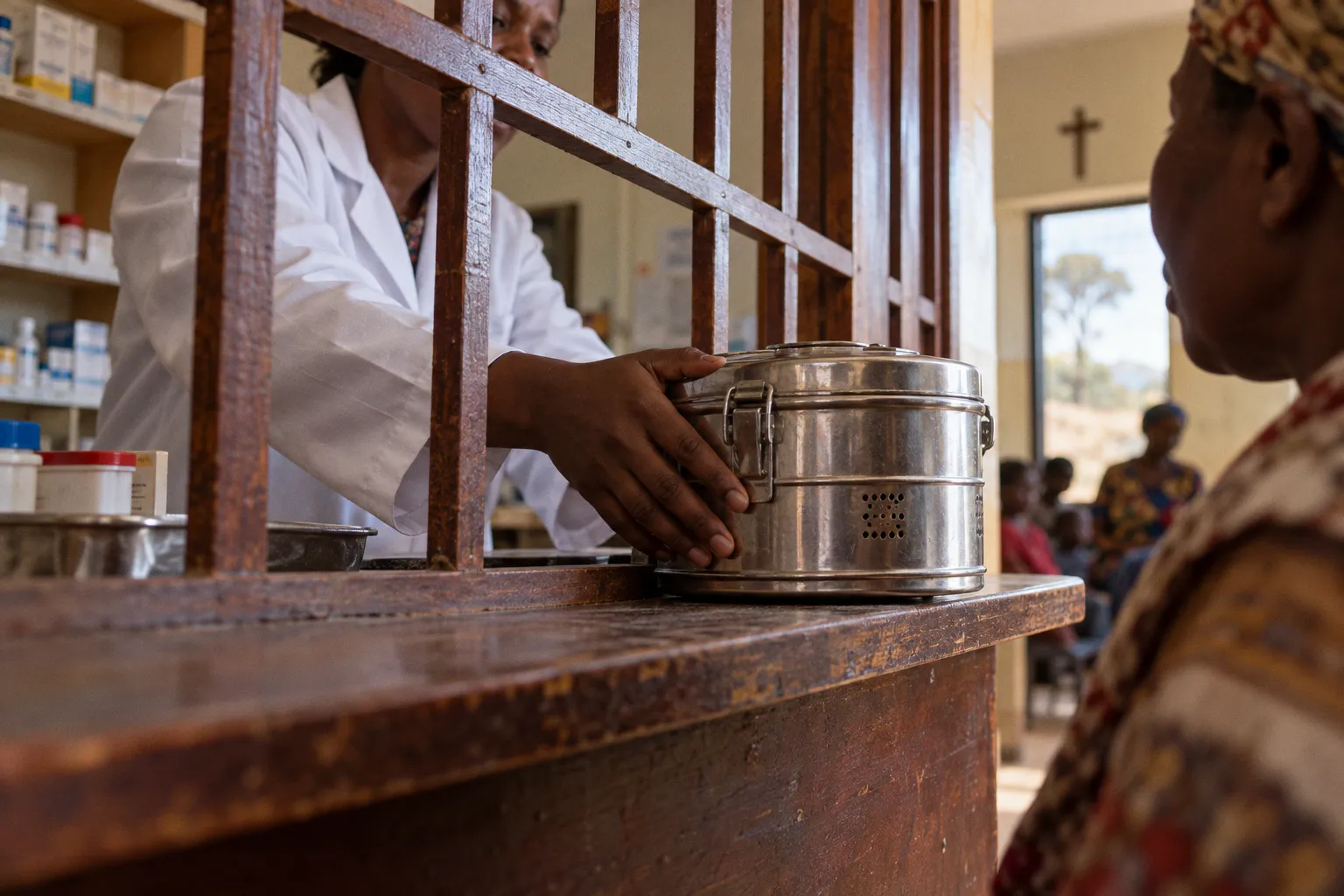
Good intentions do not substitute for a current sanitation report, valid staff credentials, or proof that the organisation legally owns and governs the premises.
That is not an argument against faith-based healthcare. It is an argument for taking its legal foundation seriously. Registration gives a church-run health centre the structure it needs to remain open, employ professionals lawfully, handle medicines and medical waste properly, and refer patients safely when their needs exceed the dispensary’s capacity.
Legal Framework and KEPH Level 2 Classification for Mission Facilities
Kenya’s health system is organised around defined levels of care, and the Kenya Essential Package for Health, or KEPH, provides an important reference point for understanding what a facility is expected to deliver. A mission facility is not exempt from this framework because it is operated by a diocese, religious congregation, charitable trust, or Christian health network. Faith-based ownership changes the governance context, not the basic safety obligations.
A typical mission dispensary falls within KEPH Level 2. In practical terms, this is the level associated with basic outpatient and primary care services. Depending on its approved scope, a Level 2 facility may provide services such as:
- Initial assessment, triage, and treatment of uncomplicated outpatient conditions
- Health education, preventive care, and community outreach
- Antenatal follow-up for pregnancies that do not require higher-level intervention
- Immunisation and child health services where the facility is authorised and equipped to provide them
- Basic nutrition support and screening
- Minor procedures and first-line management within the competence of the staff
- Referral of emergencies, complicated pregnancies, serious infections, and other cases beyond the facility’s scope
The classification is not merely a label on an application form. It sets the boundary between the service the dispensary is registered to provide and the service that belongs in a health centre or hospital. A facility that describes itself as a dispensary but gradually begins offering higher-level services without the corresponding approval creates a problem for its governing body, its clinicians, and its patients.
The licensing process for faith-based clinics therefore begins with a clear description of the facility. The application should reflect the actual premises, staffing, equipment, services, and referral arrangements. If the dispensary has a maternity room, laboratory, pharmacy unit, or procedure area, those functions should not be treated as invisible additions to the original registration. They may bring separate professional, premises, or operational requirements.
Facility registration is handled through the Kenya Medical Practitioners and Dentists Council (KMPDC) under the Medical Practitioners and Dentists Act, Cap 253. The regulatory route is not replaced by church sponsorship or charitable status. A private clinic in an urban neighbourhood and a sister-run dispensary in a remote sub-county may have very different resources, but both remain responsible for lawful operation and safe patient care.
KMPDC’s formal requirements for opening a health institution, first published on 1 August 2017, continue to provide the basic compliance reference used by many facilities. A complete application is generally expected to move through the Council’s process within its stated target period, but a target turnaround should not be confused with automatic approval. Missing documents, inconsistent ownership details, expired reports, or unclear staffing arrangements can delay the file.
A Level 2 registration is not a promise to do everything. It is a disciplined promise to do defined primary care safely and to refer what lies beyond the dispensary.
The facility’s level should also be reflected in its public communication. A signboard, website, community notice, or church announcement should not imply hospital services where the facility is licensed only as a dispensary. Clear communication protects patients from arriving with expectations that the premises and staff cannot responsibly meet.
Governance Documentation and Ownership Verification Protocols
Before the Council evaluates the clinical rooms, it needs to establish who owns, controls, and accepts responsibility for the facility. This is a recurring difficulty for mission dispensaries because the name used by the local community is often different from the legal name of the organisation operating the premises.
The dispensary may be governed by:
- A registered company
- A registered business name
- A charitable or religious trust
- A diocese, congregation, or other incorporated religious body
- A community health organisation with a formal legal structure
The organisation’s legal identity must be consistent across the registration application, tax records, lease or ownership documents, professional contracts, bank records where relevant, and the facility’s correspondence with regulators. A local name that is familiar to patients cannot replace the legal entity that is accountable for the licence.
Typical ownership and governance evidence includes one of the following:
- A Certificate of Incorporation for a registered company
- A Business Name Registration Certificate for a registered business name
- A Trust Deed for a registered charitable trust
- Equivalent incorporation or registration evidence for the religious or charitable body responsible for the facility
The file should also contain a current CR12 or Official Search, issued within the preceding six months where that is required for the entity and application. This document helps establish the current directors, trustees, or principal officers connected with the organisation. An old search can create uncertainty even when the governing body itself has not changed. A new officer may have been appointed, a trustee may have retired, or the registered details may no longer match the people signing the application.
The practical lesson is simple: do not wait for an inspection notice before checking the governance file. A mission facility should have one named person responsible for maintaining the legal documents and one clearly identified officer authorised to communicate with KMPDC and county authorities.
That responsibility should include:
1. Confirming that the legal entity named on the application is the entity operating the facility.
2. Checking that the governing document supports the organisation’s role as owner or operator.
3. Keeping the CR12 or Official Search within the accepted validity period.
4. Recording changes in trustees, directors, principal officers, or authorised signatories.
5. Ensuring that certified copies are available when the Council requests them.
6. Reconciling the organisation’s name and address across the facility licence, tax documentation, contracts, and correspondence.
This is also where ownership and tenancy arrangements need attention. A church may own the building while a separate trust operates the dispensary. A religious congregation may provide staff while a diocese holds the formal licence. Those arrangements are possible, but they should be documented rather than left to institutional memory. The regulator needs to know which body is responsible for the premises, which body employs or contracts the staff, and which body carries the duty to correct a compliance failure.
Stewardship of a mission dispensary begins before the patient arrives. It begins with a file that makes responsibility visible.
A tax identity is part of that file as well. The operating entity should have its KRA PIN certificate available, together with any other tax or business documentation required for the application. The KRA details should correspond to the legal entity named in the registration documents. A mismatch between the church’s name, the trust’s name, and the facility’s trading name can slow the process and make later renewals unnecessarily difficult.
Mandatory Sanitation and Environmental Compliance Standards
Sanitation requirements are not a formality added to the end of the application. They are a direct test of whether the facility can protect patients, staff, and the surrounding community from preventable harm.
A mission dispensary should obtain a Sanitation Inspection Report from the County Department of Health and keep it current. The report is generally valid for no more than six months, so a facility cannot treat one inspection as permanent evidence of compliance. Premises change, water arrangements fail, drainage deteriorates, storage areas become congested, and waste-handling practices can drift when a small team is under pressure.
The county inspection may examine matters such as:
- Availability and condition of water and hand-hygiene points
- Toilets and other patient sanitation facilities
- Ventilation, lighting, and general cleanliness
- Separation of clean and contaminated activities
- Safe storage of medicines and clinical supplies
- Sharps containers and temporary waste-storage arrangements
- Infection-prevention practices
- Pest control, drainage, and the condition of the surrounding compound
- Basic arrangements for privacy and safe patient flow
The precise assessment will depend on the county process and the nature of the facility. The important operational point is that the report should be renewed before it expires, not after a lapse has already occurred. Someone should maintain a calendar with the date of the last inspection, the expiry date, the person responsible for renewal, and the evidence of communication with the county team.
Environmental compliance has a second dimension: medical waste. The facility should either hold the appropriate NEMA Environmental Compliance Certificate for its operations or maintain an executed contract with a NEMA-approved medical waste handler, as applicable to its circumstances and the current regulatory requirements.
For many small dispensaries, contracting an approved handler is more realistic than operating an internal treatment system. That does not remove the facility’s responsibility. The dispensary still needs a traceable process for segregation, temporary storage, collection, and documentation. Sharps, contaminated dressings, expired pharmaceuticals, pathological waste, and other regulated materials should not be placed in ordinary household waste or left in an unsecured area.
The waste contract should be read rather than filed unread. The facility should know:
- What categories of waste the contractor accepts
- How waste is packaged and labelled
- Where it is stored before collection
- How often collection takes place
- What records or collection notes are issued
- Who is contacted when a collection is missed
- Whether the contractor’s approval remains current
The Pharmacy and Poisons Board (PPB) also matters where the mission facility operates a dispensary or medicine-dispensing unit. The PPB guideline cited in the registration context sets the minimum room size at 8 feet by 10 feet. A room that was once used for general storage may not be suitable for dispensing medicines simply because shelves and a counter have been installed. The layout should support secure storage, orderly dispensing, patient privacy, stock control, and inspection.
A small facility does not need to imitate a hospital. It does need to build around the actual work. Medicines should be protected from heat, moisture, unauthorised access, and avoidable mix-ups. Expired or damaged stock should be segregated and handled through an appropriate process. Records should allow the facility to account for what came in, what was dispensed, and what remains.
Clinical Staff Licensing and Professional Board Requirements
Facility registration is inseparable from staff registration. A compliant building cannot compensate for a practitioner who is working without current professional authority, and a strong clinical team cannot make an unregistered facility lawful.
Every person providing regulated clinical services should have documentation that confirms:
- Relevant academic qualifications
- Registration with the appropriate professional regulator
- A current practising licence
- A role that matches the person’s competence and the facility’s approved scope
The applicable regulator depends on the profession:
| Regulator | Professionals or function covered | Practical relevance to a mission dispensary |
|---|---|---|
| KMPDC | Medical practitioners and dentists | Applies where doctors or dentists work at the facility and supports verification of the clinical lead where required |
| Clinical Officers Council | Clinical officers | Covers a common clinical cadre in Level 2 facilities |
| Nursing Council of Kenya | Nurses and nursing professionals | Applies to the nurses responsible for direct care, maternal services, immunisation, and other authorised duties |
| Pharmacy and Poisons Board | Pharmacists and pharmaceutical technologists | Relevant to the medicine-dispensing function and the professionals managing it |
| Relevant laboratory regulatory authorities | Laboratory professionals and services | Applies where the facility operates or offers laboratory testing |
| NEMA and approved waste arrangements | Medical waste management | Concerns the legality and traceability of the disposal chain rather than clinical practice |
The names on the staff schedule should match the names on the professional registers and in the employment or service contracts. Where a practitioner uses a different name from the one appearing on an academic certificate or registration record, the facility should keep the supporting documentation that explains the difference.
The most common weakness in small facilities is not always the absence of a qualified person. It is the absence of a renewal system. A nurse may have worked safely for years, yet still be unable to practise lawfully if the annual practising licence has expired. The same applies to doctors, clinical officers, pharmaceutical technologists, and other regulated professionals.
A mission dispensary should maintain a staff credential file that includes copies of:
- Academic certificates and relevant training evidence
- Registration certificates
- Current practising licences
- Identification documents where required for verification
- Contracts, appointment letters, or service agreements
- Induction and orientation records
- Scope-of-practice or duty assignments
- Evidence of renewal applications where a licence is being updated
The facility manager should review the file before the beginning of each renewal cycle, rather than relying on each employee to remember every deadline. A simple internal register can record the professional body, registration number, licence expiry date, and person responsible for follow-up. This is an administrative tool, not a substitute for verification through the relevant board.
Staffing must also match the approved service level. A dispensary should not advertise specialist services merely because a visiting practitioner comes occasionally. If a service is intermittent, the facility needs clear arrangements for scheduling, documentation, referral, emergency escalation, and continuity of care.
The same principle applies to students, volunteers, religious workers, and visiting clinicians. Their presence in a mission setting does not itself authorise them to perform regulated clinical duties. The facility should define what each person may do, under whose supervision, and with what documentation. Compassionate service becomes unsafe when roles are assumed rather than recorded.
Regulatory Deadlines and KMPDC Documentation Submission Directives
The registration file should be treated as a live compliance record, not a folder assembled once and forgotten. KMPDC may request certified copies of ownership documents, governance records, KRA PIN documentation, sanitation evidence, and professional licensing records. A facility that has these documents ready is in a far stronger position than one that starts searching for them after receiving a directive.
On 10 February 2026, KMPDC issued a directive affecting private, faith-based, community-based, and NGO health facilities. The directive required certified copies of ownership and governance documents, KRA PINs, and licensing paperwork to be submitted by 3 March 2026. Facilities should read such communications according to the instructions and deadlines stated in the notice, while also confirming any later updates directly with the Council.
The practical order of work is straightforward:
1. Identify the legal entity operating the dispensary and confirm that its registration documents are current.
2. Obtain certified copies of the Certificate of Incorporation, Business Name Registration Certificate, Trust Deed, or other applicable governance evidence.
3. Refresh the CR12 or Official Search when it falls outside the accepted validity period.
4. Confirm that the county sanitation report remains valid and arrange a new inspection before expiry.
5. Review the NEMA environmental position and keep the waste-handler contract, approval evidence, and collection records together.
6. Verify every clinician’s professional registration and practising licence.
7. Check that the KRA PIN certificate belongs to the entity named in the facility application.
8. Review the premises against the approved service level, including the medicine-dispensing room and waste-storage arrangements.
9. Confirm the current KMPDC fee applicable to the facility category before making payment.
10. Keep proof of submission, payment, correspondence, and any inspection outcome in the facility’s permanent compliance file.
The fee schedule cited for KMPDC licensing distinguishes between facility categories:
| Facility tier | Annual KMPDC licence fee |
|---|---|
| Dispensary | KES 5,000 |
| Medical clinic | KES 15,000 |
| Maternity home | KES 25,000 |
| Nursing home | KES 30,000 |
For a facility registered strictly as a dispensary, the relevant line is the dispensary fee. If the same organisation operates additional services or a higher-level facility, it should not assume that the lowest fee applies to the entire operation. The category should correspond to the highest level of care and the licence being sought. Because fees and submission instructions can change, the facility should confirm the current amount and payment route with KMPDC before submitting.
A further KMPDC circular dated 22 September 2026 reinforced the prohibition on allowing unlicensed practitioners to work within health institutions. The administrative response should be immediate: review the staff register, confirm each licence, suspend duties that require a current licence where renewal has not been completed, and document the steps taken. A facility’s responsibility does not end with asking whether someone is generally qualified. It must ensure that the person is authorised to practise at the time the service is delivered.
SHA accreditation and contracting for mission dispensaries
Older guidance often says that a mission facility can be accredited by NHIF. That wording is no longer current. By the September 22, 2026 reference date, NHIF had been replaced by Kenya’s Social Health Authority (SHA).
A compliant facility should therefore refer to SHA empanelment and contracting, or the current SHA terminology used for facilities that are approved to provide and claim for covered services. The exact requirements may depend on the service, the relevant SHA programme, the facility category, and the documents requested through the current process. Registration with KMPDC is foundational, but it should not be described as automatic SHA approval.
This distinction matters in a mission setting. A dispensary may be legally registered yet still need to complete a separate SHA process before it can provide particular covered services or submit claims under the Authority’s arrangements. The governing organisation should keep the KMPDC licence, county approvals, professional credentials, service capability evidence, bank or payment details where requested, and SHA correspondence aligned.
The relationship between the two processes can be understood without collapsing them:
| Regulatory function | What it establishes |
|---|---|
| KMPDC facility registration | That the health institution is legally registered within the applicable health-facility framework |
| Professional board registration | That individual practitioners are qualified and authorised to practise |
| County sanitation and public-health inspection | That the premises meet local health and sanitation expectations |
| NEMA waste compliance | That regulated waste is managed through an approved arrangement |
| PPB requirements | That medicine-related premises and personnel meet the applicable standards |
| SHA empanelment or contracting | That the facility may participate in the relevant SHA service and payment arrangements, subject to current requirements |
A church-run health centre should not promise patients that a service will be covered merely because the facility has begun the SHA application. Until the arrangement is approved and active, communications should remain accurate about fees, eligibility, and payment.
Turning Compliance into Ministry
Registration can feel remote from the work that brings people to a mission dispensary. The forms do not comfort a frightened child, monitor a pregnancy, or explain a treatment plan. But a facility that is properly registered is better placed to keep providing those services tomorrow.
That is especially important for faith-based healthcare, where continuity often depends on trust. Patients return because the dispensary is familiar, because staff know the community, and because the facility remains available when transport to a larger hospital is difficult. Regulatory compliance protects that continuity. It supports lawful staffing, safe medicine handling, accountable waste disposal, and credible referral relationships.
The same is true of SHA participation. A mission facility may seek SHA empanelment or contracting because it wants eligible patients to access covered services through the Authority’s current arrangements. It should use the correct terminology and keep the process separate from KMPDC registration, but the practical goal is connected: reducing the chance that a patient is forced to abandon necessary care because the facility’s administrative foundation is incomplete.
The work is not glamorous. It is calendar work, document work, renewal work, and follow-up with offices that may already be carrying heavy workloads. Yet these details determine whether a dispensary can remain open, whether its professionals can practise with confidence, and whether its governing body can answer clearly when a regulator asks who is responsible.
The strongest mission facilities do not treat compliance as a one-time application. They build it into ordinary management:
- The facility licence is reviewed before it expires.
- The sanitation report is renewed on schedule.
- The CR12 or Official Search is refreshed before it becomes stale.
- Staff licences are checked as part of supervision.
- Waste records are reconciled with collections.
- Medicines are stored and dispensed within the approved arrangement.
- SHA information is updated when the Authority changes its process.
- Changes in ownership, leadership, premises, or services are recorded rather than left informal.
The result is more than a complete file. It is an institution that knows what it is, what it can safely offer, and when it must refer. That clarity serves the patient first.
The licence on the wall expresses the same promise made at the bedside: the facility will be present, safe, and accountable.
For a mission dispensary, the next step is not to accumulate paperwork for its own sake. It is to make the paperwork tell the truth about the care being delivered. Confirm the KEPH level. Align the legal entity with the application. Renew the county and professional documents. Maintain the NEMA waste arrangement. Verify the PPB requirements for the dispensing area. Submit KMPDC documents through the current process, and treat SHA empanelment or contracting as a separate, current regulatory pathway.
The ministry remains in the consultation room and on the dispensary floor. Registration is what helps that ministry remain there.