Tuberculosis screening: should mission clinics go door-to-door?
Kenya recorded 90,841 tuberculosis cases in 2022 against an estimated national burden of 133,000, a notification rate of roughly 68%. The remaining gap represents people who were not diagnosed or notified through routine services.
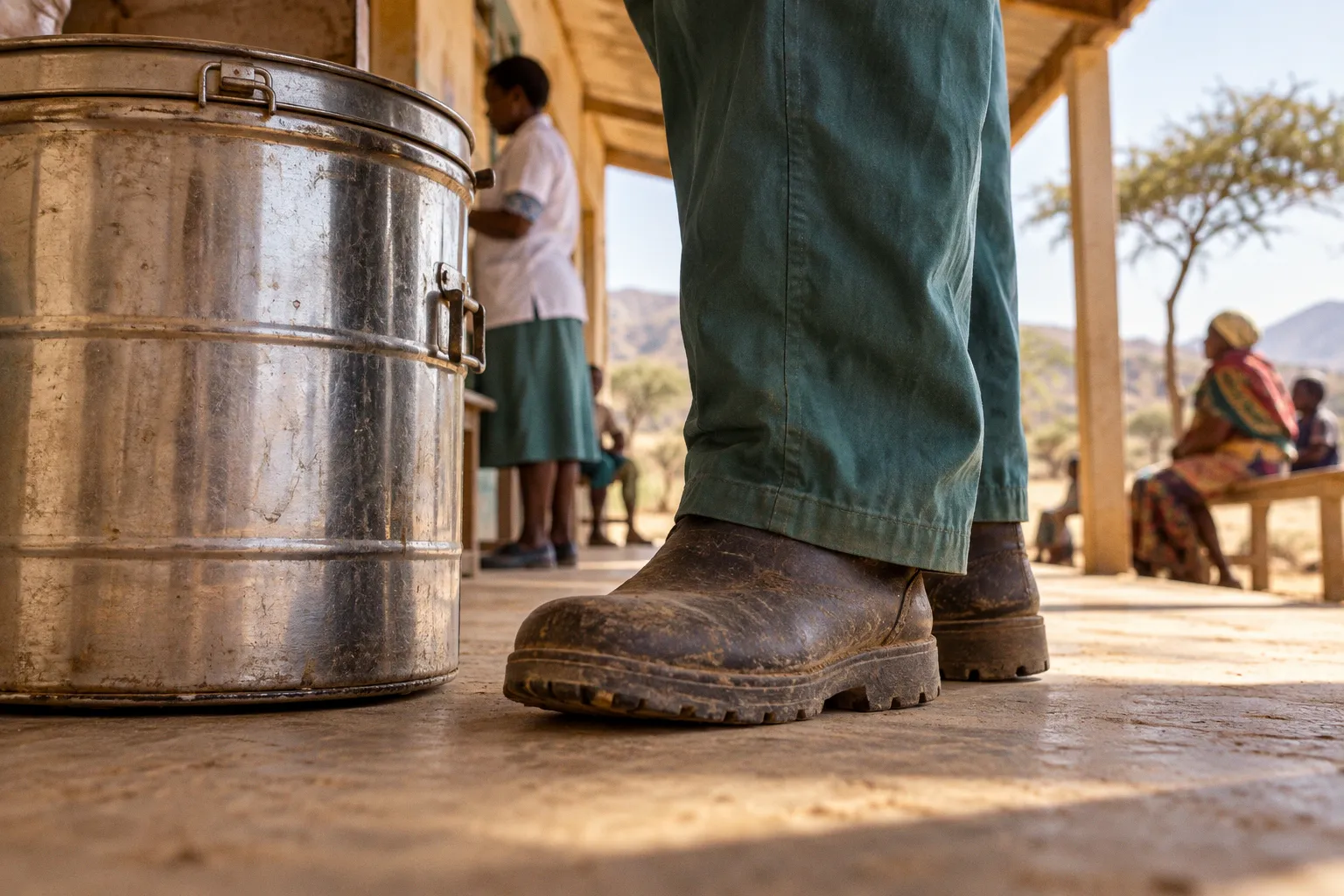
The 40% Gap: Why Passive Facility Testing Fails Rural Kenya
Operational data from the National Tuberculosis, Leprosy and Lung Disease Program (NTLD-P) places the undiagnosed share closer to 40% in some rural settings. That estimate should be treated as a warning about the limits of facility-based detection, not as a fixed national trend.
For mission clinics operating in remote counties, the gap is not abstract. Passive detection assumes that a person with tuberculosis symptoms recognizes a problem, decides to seek care, can afford the journey, reaches a facility, and is correctly identified during the first clinical encounter. The 2015–2016 National TB Prevalence Survey showed how often those assumptions fail. More than 67% of people with TB symptoms in the survey did not seek health care at all. Among those who did present to a facility, more than 80% were initially missed by the diagnostic algorithm.
Distance is only one part of the problem. A visit to a distant clinic may mean transport costs, a full day away from farming or other work, and the risk of being recognized by neighbors as someone seeking care for a stigmatized disease. These pressures are particularly consequential when the person is not severely ill. Someone who can still work may postpone a trip for weeks, even while continuing to share a household and workplace with others.
The clinical picture is further complicated by the fact that a substantial proportion of bacteriologically confirmed pulmonary TB cases may not present with classical symptoms at the time of screening. A person without persistent cough, obvious weight loss, or fever can therefore remain outside a symptom-led referral pathway. That does not make every apparently well person a TB suspect. It does mean that symptom questions alone cannot be treated as a complete case-finding strategy.
Active case finding (ACF) — systematic screening and referral outside the facility — addresses the access problem directly. It takes at least the first step of the diagnostic process to households, workplaces, markets, schools, or other community settings. But door-to-door screening is not automatically effective simply because it is closer to patients. Its value depends on what happens after a community health promoter identifies a presumptive case: whether a sample is collected, whether it reaches a molecular testing site, whether a result comes back, and whether treatment begins when indicated.
The decision for a mission clinic is therefore operational rather than ideological. Door-to-door ACF can be appropriate where passive testing leaves too many people outside the health system. It becomes wasteful when the clinic has no credible way to complete the diagnostic cascade.
Analyzing the 6.3% Yield: Real-World Data on Active Case Finding
National ACF operational data provides a useful picture of that cascade. In door-to-door community screening campaigns, Community Health Promoters (CHPs) referred 23,374 presumptive TB patients. Of those, 15,391 arrived at facilities for evaluation, and 1,487 received a bacteriologically confirmed TB diagnosis. The end-to-end diagnostic yield — confirmed cases as a proportion of people initially flagged at household level — was 6.3%.
The value of the figure is not that it offers a universal prediction for every mission clinic. It shows how much can be lost between the first household conversation and confirmed diagnosis. A program can appear active on paper, with many people screened and referred, while producing fewer confirmed diagnoses than expected because people do not reach the facility or samples do not move through the testing system.
The numbers also make the referral-to-arrival problem visible. The difference between those referred and those who reached a facility represents roughly 34% of the initial group. That proportion is an observed loss in the reported national ACF cascade; it should not be treated as a permanent rate for every county, campaign, or workforce model. The reasons for non-arrival may include transport barriers, competing work, stigma, changing symptoms, unclear instructions, and the absence of someone responsible for follow-up.
A mission clinic should therefore record more than the number of households visited. At minimum, it needs to distinguish between:
- people screened at household or community level;
- people classified as presumptive TB cases;
- people who provide a sputum sample or complete the next diagnostic step;
- samples that reach the testing site;
- people who receive a result;
- bacteriologically confirmed diagnoses;
- people who start treatment or are referred onward.
These are not administrative details. Each transition represents a possible failure point, and the appropriate response differs depending on where the loss occurs. If presumptive patients are identified but do not arrive, the program may need transport support, clearer appointment systems, or a link assistant. If samples arrive but results are delayed, the priority is laboratory logistics. If many people complete testing but very few are confirmed, the screening algorithm and the local epidemiology require review.
The 6.3% result is therefore meaningful as a national ACF observation, but it cannot be used as a universal operational floor or ceiling. A clinic serving a highly mobile population, a dispersed pastoralist community, or an area with a strong referral network may produce a different yield. The same campaign can also perform differently depending on whether screening is symptom-only, whether chest X-ray is available, how presumptive cases are selected, and how quickly samples and results move.
Nor should the figure be compared casually with an unsupported percentage from facility-based care. Passive and active programs use different denominators and reach different populations. A facility usually records people who have already overcome the barriers to seeking care. A door-to-door campaign starts with people who may never have presented on their own. The useful comparison is not a generic claim that one pathway produces a certain percentage and the other produces almost none. It is whether community screening identifies additional people who would otherwise remain outside the diagnostic system in the same catchment.
The 6.3% result is best read as a cascade measure: it shows what remained after household screening, referral, arrival, testing, and confirmation — not what screening alone achieved.
Symptom-only ACF has a further limitation. In the Kenyan prevalence survey, more than half of bacteriologically confirmed TB cases reported no classical symptoms at the time of identification. A protocol based exclusively on cough duration, fever, and weight loss will not capture all people with pulmonary TB. Symptom screening remains useful for triage and prioritization, but it is not a diagnostic endpoint.
That distinction matters in a remote setting. A mission clinic may be able to train CHPs to ask a consistent set of questions, but it cannot assume that a negative symptom screen rules out disease. The protocol must specify who is referred for further assessment, how people with risk factors or concerning contacts are handled, and what happens when symptoms are absent but clinical concern remains. The more ambitious the program, the more important it becomes to define these decisions before the first household visit.
The Infrastructure Prerequisite: AI X-Rays and GeneXpert Networks
Active case finding is diagnostically credible only when it is connected to confirmation. A household referral without a workable testing route may document concern without resolving it. For mission clinics, the central infrastructure question is not whether a portable device can be brought into a village for a screening day. It is whether the clinic can connect that encounter to a reliable diagnostic and treatment pathway.
Two technologies are important in the current Kenyan TB diagnostic network: molecular testing with GeneXpert MTB/RIF Ultra and portable chest X-ray supported by computer-aided detection (CAD).
GeneXpert provides molecular confirmation at network facilities. Its operation requires more than the machine itself. The system depends on electricity, cartridges, trained laboratory personnel, equipment maintenance, sample handling, and a process for communicating results to the patient or referring clinician. A mission clinic without on-site GeneXpert access therefore needs a functioning sputum transport arrangement. The draft target of a turnaround under 72 hours is operationally demanding, but it captures the relevant principle: a sample that leaves the community and disappears into an uncertain logistics chain is not an effective referral.
The clinic should know in advance:
- where sputum will be tested;
- who will package and transport it;
- how often transport runs;
- how rejected or inadequate samples are handled;
- who receives the result;
- how the patient is contacted;
- who confirms treatment initiation when TB is diagnosed.
Each question is particularly important for patients who live far from the facility. Asking someone to return repeatedly for collection, results, and treatment may recreate the same access barrier that ACF was intended to remove.
Portable chest X-ray with CAD can add a second layer of triage. Across 10 Kenyan counties, ultra-portable chest X-ray units supported by CAD software screened more than 9,000 people as part of ACF activities. The supplied 88% sensitivity figure belongs to chest X-ray performance against a bacteriologically confirmed reference standard in the prevalence-survey evidence; it should not be presented as a standalone performance figure for AI-CAD. CAD may help interpret images and flag radiographic abnormalities, but it does not replace molecular confirmation and should not be described as if it independently establishes a TB diagnosis.
This distinction is more than technical wording. A positive or concerning image should direct a person toward sputum collection and molecular testing. A negative image may reduce the likelihood of radiographically apparent pulmonary disease, but the clinical pathway still has to account for symptoms, contacts, risk factors, image quality, and the possibility that disease is not captured by a single screening encounter.
A practical mission-clinic cascade might therefore include:
1. A CHP conducts a structured household or community screen.
2. People meeting the referral criteria receive clinical assessment and, where available, portable chest X-ray with CAD-assisted triage.
3. Presumptive cases provide sputum for GeneXpert MTB/RIF Ultra testing.
4. Samples move through an agreed transport route to the testing facility.
5. Results are communicated through a named person or team rather than left to the patient to discover.
6. Confirmed patients are linked to treatment, while those with an unresolved result receive a documented next step.
The exact sequence may change with local resources. A clinic may collect sputum before imaging, or use a mobile imaging unit on scheduled days rather than at every household visit. What cannot be removed is the connection between screening and confirmation.
| Parameter | Symptom-led door-to-door screening | CXR-CAD triage linked to GeneXpert | Facility-based passive detection |
|---|---|---|---|
| Main strength | Reaches people who may not seek care | Adds radiographic triage to community outreach and connects it to confirmation | Uses an established clinical setting |
| Main limitation | Can miss people without classical symptoms | Requires equipment, trained operators, power, maintenance, and a molecular pathway | Misses people who do not or cannot present |
| Evidence in the supplied data | Part of the national ACF cascade that produced a 6.3% end-to-end yield | Chest X-ray evidence includes an 88% sensitivity figure against a bacteriologically confirmed reference standard; this is not a standalone AI-CAD diagnosis figure | The prevalence survey documented substantial missed disease among people presenting for care |
| Infrastructure requirement | CHP time, referral system, and sample transport | Portable imaging, CAD support, sample transport, GeneXpert access, and result communication | Functioning facility and diagnostic staff |
| Best use | Initial reach and triage where resources are limited | Higher-intensity outreach where the full pathway can be supported | Routine care for people who present voluntarily |
The table does not identify one universal model. It clarifies the trade-off. Symptom-led outreach may be the only feasible starting point for a small clinic, but it should be described honestly as an initial triage layer. CXR-CAD can strengthen screening where it is available, but the device does not solve the referral problem by itself. Passive facility testing remains necessary for routine care, yet it cannot substitute for outreach in communities where many people do not present.
A mission clinic should audit this chain before purchasing equipment or announcing a campaign. If the result pathway is uncertain, expanding the number of screening visits may simply expand the number of unresolved referrals.
Human Capital: Remuneration Models for Community Health Promoters
Workforce design determines whether door-to-door ACF becomes a diagnostic service or a short-lived exercise in counting contacts. CHPs are often the first people to enter a household, explain why screening matters, identify a person who may need testing, and persuade that person to complete the next step. Their work is relational as well as technical.
The available operational evidence from Western Kenya indicates that attendance at mobile screening units was significantly higher in rural sites where community health volunteers received daily minimum-wage compensation than in sites relying on a nominal monthly stipend. That finding supports a narrower conclusion than the draft originally claimed: remuneration affected attendance in the observed sites. It does not by itself establish that the same model consistently improves sputum return, reduces loss to follow-up, or should be treated as a national standard.
The distinction matters because ACF has several different workforce tasks. A CHP may identify a presumptive patient, but another person may be responsible for collecting the sample, arranging transport, contacting the household, or confirming treatment initiation. Paying for attendance at a screening event does not automatically guarantee performance at every later stage of the cascade.
Mission clinics should make those tasks explicit. A workable role description might cover:
- household mobilization and consent;
- symptom and risk assessment using the approved local protocol;
- referral explanation in a language the household understands;
- documentation of the patient’s preferred contact route;
- coordination with the clinic or mobile team;
- follow-up after referral, within the limits of confidentiality and safety;
- escalation when a patient cannot reach the facility.
The remuneration model should match the work actually required. A campaign-day payment may be appropriate for a narrowly defined mobilization activity. It is less suitable when CHPs are expected to return to households, trace missing results, or support treatment linkage over time. A monthly stipend may offer continuity, but it also needs a realistic account of travel, time, supervision, and competing responsibilities. No payment model can compensate for an impossible workload or an unreliable diagnostic service.
Facility-based ACF data from Murang'a County offers a related lesson. Sites using dedicated TB link assistants — staff whose role included helping presumptive patients move from screening through the diagnostic cascade toward treatment — recorded a statistically significant increase in case-finding yield, with an adjusted incidence rate ratio of 6.39. The result supports the importance of a defined linkage function. It does not mean that every clinic will reproduce that effect, nor does it prove that the same staffing arrangement is the only way to close the referral gap.
The operational implication is straightforward: someone must own the interval between referral and diagnosis. In a small mission clinic, that person may be a nurse, a CHP supervisor, a link assistant, or a rotating outreach coordinator. The title matters less than the handover. If responsibility is shared by everyone, it is often owned by no one.
Supervision also deserves attention. CHPs need feedback on whether referrals were appropriate, whether samples were usable, and whether patients received results. Without that feedback, the screening form becomes a one-way reporting instrument. Workers may continue to record referrals without knowing which parts of the process are functioning.
A clinic should monitor workforce indicators alongside clinical ones:
- number of active CHPs and households reached;
- attendance at scheduled outreach sessions;
- proportion of presumptive patients who complete the next step;
- time from referral to sample collection;
- proportion of results successfully communicated;
- unresolved referrals requiring follow-up;
- staff turnover and missed outreach days.
These measures do not prove clinical impact on their own. They help identify whether a poor yield reflects the screening approach, the referral system, the laboratory pathway, or workforce instability.
A CHP can open the door to diagnosis, but the program still needs a person, a sample route, and a result pathway to get the patient through it.
For mission clinics, the safest conclusion from the remuneration evidence is not that one compensation model always wins. It is that community screening depends on paid time, defined responsibilities, and continuity. If the program asks volunteers to absorb transport costs and unpaid follow-up, it should expect the cascade to weaken at precisely the points that determine whether a referral becomes a diagnosis.
Integrating TB Outreach with NCD Care for Sustainable Impact
Mission-clinic infrastructure in rural Kenya is rarely devoted to TB alone. The same community teams may already be involved in screening or follow-up for diabetes, hypertension, maternal health, HIV, or other primary-care priorities. That creates a practical opportunity: TB screening can be integrated into existing outreach rather than organized as a separate campaign every time resources become available.
Integration does not mean adding every question to every visit. It means designing a shared route for community contact, triage, referral, and follow-up. A CHP visiting a household for blood-pressure or diabetes screening may also ask the approved TB questions, identify a person who needs further evaluation, and explain where sputum collection or imaging will take place. The TB referral must remain clinically clear; it should not be hidden inside a long, undifferentiated checklist.
There is also a clinical reason to connect the services. Diabetes is a recognized risk factor for TB progression and can complicate treatment. People already engaged in chronic-disease care may have repeated contact with health workers, making follow-up more feasible than for a household reached once during a stand-alone campaign. That does not make every person with hypertension a presumptive TB patient. It means that established care relationships can provide additional opportunities to ask about symptoms, contacts, and missed diagnostic steps.
Integration can improve the use of scarce infrastructure, but it is not automatically cheaper or better. A combined outreach visit may reduce duplication of travel and mobilization. It may also overload CHPs, lengthen waiting times, or weaken the quality of each screen if the protocol becomes too ambitious. The design should begin with the tasks that can genuinely be completed during one visit and the tasks that require a separate referral.
A sensible division might look like this:
- At household level: brief TB symptom and risk screening alongside the existing NCD activity.
- At the mobile service point: clinical review, blood-pressure or glucose checks where indicated, and chest X-ray triage if the equipment and staff are available.
- At the diagnostic network: sputum testing through GeneXpert and communication of results.
- At follow-up: treatment linkage for confirmed TB and continued NCD care through the existing community team.
Portable chest X-ray may provide additional value in an integrated outreach setting, but its role must remain defined. It can support triage for people who need molecular testing; it does not turn a community imaging event into a complete TB service. The clinic still needs a system for sputum collection, transport, interpretation of results, and treatment initiation.
The same principle applies to data. If TB and NCD outreach use unrelated registers, the clinic may not know that a person referred for sputum testing is already receiving care for diabetes or that a patient has missed both a TB result and a chronic-disease appointment. Shared identifiers and confidentiality safeguards can help teams coordinate without exposing a diagnosis unnecessarily in the community.
Integration also changes the rhythm of the workforce. A TB-only campaign may bring CHPs together for a short period and then leave them without structured follow-up. A broader primary-care program can provide more regular contact with households, but only if funding covers the expanded workload. The goal should not be to make every CHP visit carry more tasks indefinitely. It should be to use existing contacts intelligently while protecting the time required for each service.
Mission clinics should test an integrated model on a defined catchment and review the full cascade. Questions worth asking include:
1. Did adding TB screening increase the number of households reached, or did it reduce completion of the existing NCD work?
2. How many people were referred for TB assessment, and how many completed testing?
3. Were results returned through the same outreach network, or did patients have to make another unsupported journey?
4. Did the added work change CHP attendance or turnover?
5. Were confirmed patients linked to treatment without losing contact with their NCD care?
The answers will be more useful than a general claim that integration is efficient. Integration succeeds when the services share practical infrastructure without obscuring clinical responsibility.
Position
Door-to-door ACF has a strong rationale in rural Kenya because facility-based detection cannot reach people who do not seek care. The available evidence documents substantial barriers to presentation and a large gap between estimated disease burden and notified cases. It also shows that community screening can produce confirmed diagnoses: in the reported national ACF cascade, 1,487 bacteriologically confirmed cases emerged from 23,374 people initially referred, an end-to-end yield of 6.3%.
That result is meaningful, but it is not a universal benchmark for every mission clinic. It reflects the entire sequence from household identification to facility arrival and confirmation. The yield can change when the population, screening algorithm, referral arrangements, diagnostic access, or workforce model changes.
Mission clinics should consider door-to-door ACF when they can answer three operational questions.
First, what is the confirmation pathway? A symptom screen can identify people who need further assessment, but symptom-only outreach will miss some people without classical symptoms. Where available, portable chest X-ray with CAD-assisted triage can add information; the 88% sensitivity figure in the supplied evidence should be attributed to chest X-ray against a bacteriologically confirmed reference standard, not presented as an independent AI-CAD result. In all cases, presumptive patients need access to molecular confirmation through GeneXpert or an equivalent established pathway.
Second, who owns the referral? The national cascade recorded substantial attrition between referral and facility arrival. A clinic needs a named person or team to manage sample transport, result communication, and treatment linkage. Dedicated link assistants may be one model; a trained outreach coordinator or CHP supervisor may be another. The essential requirement is continuity, not a particular job title.
Third, how will the workforce be supported? Evidence from Western Kenya indicates higher attendance where community health volunteers were compensated at a daily minimum-wage level rather than through a nominal monthly stipend. That finding supports paid, defined time for outreach. It does not establish that daily compensation alone improves every downstream outcome, and it should not replace local monitoring of sample return, result communication, and treatment initiation.
TB outreach can be integrated with NCD services when the combined workload is realistic and the referral route remains visible. Shared household visits, mobile teams, and follow-up systems may help a mission clinic use limited infrastructure more effectively. But integration is not a reason to add screening tasks without adding supervision, transport, data systems, and time.
A clinic that lacks a reliable diagnostic pathway or a sustainable workforce model should be cautious about launching door-to-door ACF as a stand-alone campaign. The problem is not that outreach produces no value. The problem is that a referral without confirmation leaves the most important part of the work unfinished. The 40% gap cannot be closed by counting household visits alone.
For mission clinics, the practical standard is a complete cascade: reach people who are unlikely to present, identify those who need assessment, collect and transport the right sample, return the result, and link the patient to treatment. Door-to-door screening is one part of that system. Its success should be judged by what happens after the knock on the door.