Integrated diabetes care: the shift toward community-led models
Non-communicable diseases account for approximately 39% of deaths in Kenya. Diabetes care, however, remains difficult to reach at the scale the burden demands: an estimated 800,000 adults are…
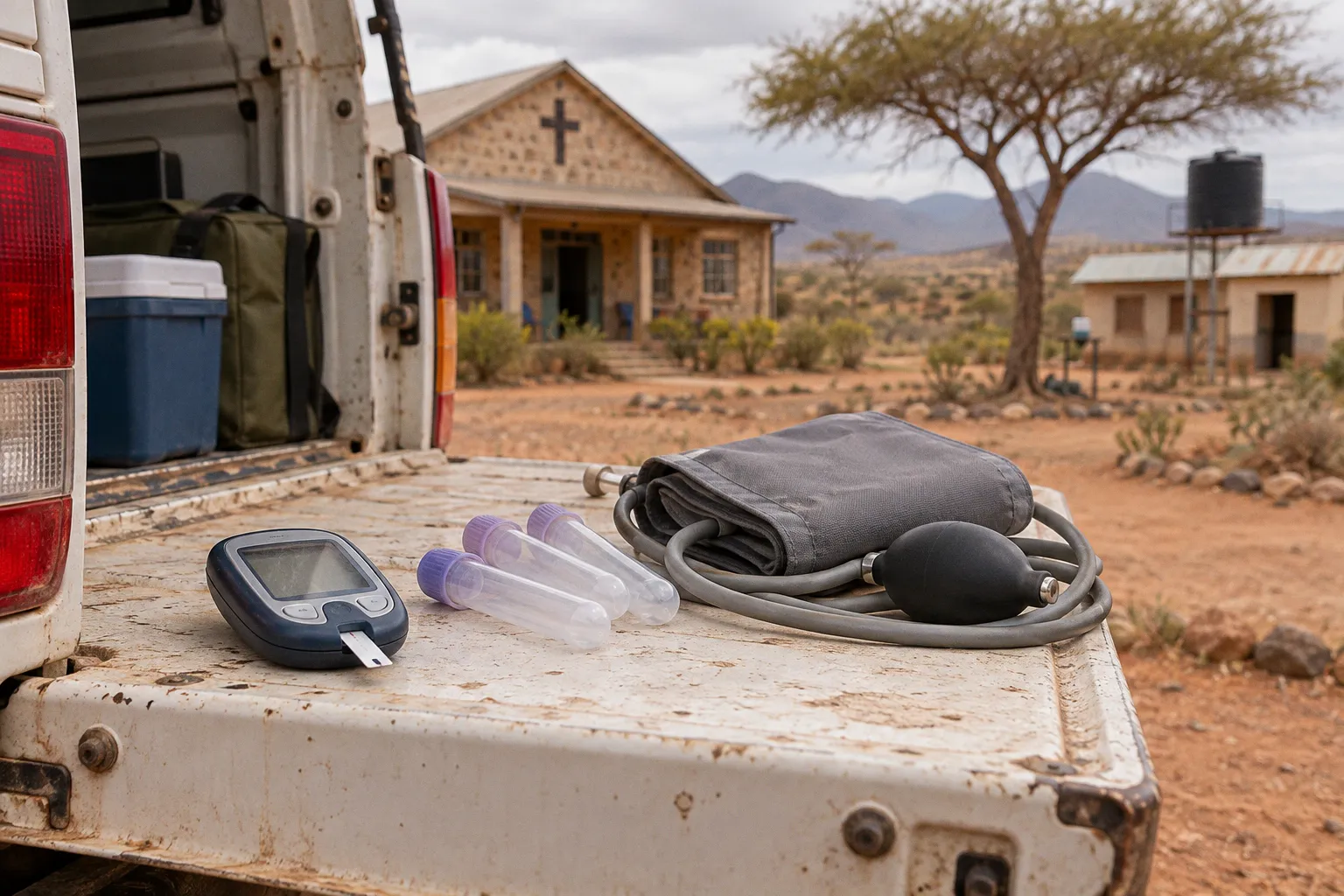
Non-communicable diseases account for approximately 39% of deaths in Kenya. Diabetes care, however, remains difficult to reach at the scale the burden demands: an estimated 800,000 adults are diagnosed and living with the disease, while only about 20% are enrolled in comprehensive care. More than 600,000 diagnosed patients are therefore outside that level of support.
The gap is wider still when undetected disease is considered. Up to 2 million people may be living with diabetes that has not been diagnosed, or with pre-diabetes. Integrated diabetes care models in Kenya are shifting part of the response away from referral hospitals and toward primary care, community health promoters and faith-based facilities. The aim is not to replace specialist care. It is to make screening, follow-up and treatment support more accessible before complications require it.
The NCD burden is also a continuity-of-care problem
Diabetes management depends on repeated contact with care, not a single diagnosis. A patient may need regular glucose monitoring, medication, clinical review and education about managing a chronic condition. When those services are concentrated in regional referral centres, distance and cost can interrupt the sequence.
That is the practical significance of the enrollment gap. A diagnosis on its own does not mean a patient is receiving comprehensive care. If follow-up is irregular, clinicians may have limited information about glucose control or medication use. Complications can progress while the patient remains disconnected from routine monitoring.
Kenya’s national response reflects a broader change in where chronic disease care is delivered. Health policy and budgets were devolved to the country’s 47 counties in 2013. The National Strategy for Prevention and Control of NCDs followed in 2021, and the Primary Health Care Act was enacted in 2023. Together, these developments create a policy basis for bringing more prevention and management into primary care.
The clinical logic is straightforward: identify risk earlier, establish a diagnosis through an appropriate pathway, and make routine follow-up possible closer to home. But decentralization only works when the system preserves clear clinical boundaries. Community screening can flag a need for assessment; it cannot substitute for confirmatory evaluation, treatment decisions or referral for complex disease.
Community-based care is not a lower standard of diabetes care. It is a way to make the first steps—and the routine steps—reachable.
That distinction matters in diabetes and hypertension co-management strategies. Both conditions can be addressed through primary care, but screening for one does not establish the diagnosis of the other. Integrated services should reduce duplicated visits and missed opportunities while preserving condition-specific assessment, documentation and treatment protocols.
Community health promoters extend the screening perimeter
Kenya’s Ministry of Health deployed 107,000 Community Health Promoters (CHPs), each serving around 100 households. Equipped with glucometers and testing supplies, they can support grassroots screening and awareness. At that scale, community-based diabetes monitoring in Kenya can reach people who may not otherwise attend a facility until symptoms become difficult to ignore.
The CHP role is best understood as an extension of the care pathway, not a parallel clinical system. A community contact can help identify a person who needs further evaluation, encourage follow-up, and support education. A positive screening result still requires clinical assessment. A glucometer reading is not, by itself, a complete diagnostic work-up.
A sound pathway has several linked steps:
1. Identify people who may need assessment. Community outreach can raise awareness and use available screening tools to flag possible elevated glucose or other risk.
2. Connect screening to a facility. A result that warrants follow-up needs a defined route to a primary care provider, where it can be assessed in clinical context.
3. Confirm and document the care plan. Diagnosis, medication decisions and referrals belong within the appropriate clinical service, with records that can support later review.
4. Maintain contact after the initial visit. Promoters and facility teams can reinforce follow-up and education, while clinical teams retain responsibility for monitoring and treatment adjustment.
5. Escalate complications. Symptoms or findings that exceed primary-care capacity require referral; community-level delivery does not eliminate the need for specialist assessment.
The weak point in many decentralized systems is not the screening event. It is the handoff afterward. If a referral is not completed, the screening has limited diagnostic yield. If records do not travel with the patient, the next clinician may have to repeat basic steps or make decisions with incomplete information. If follow-up responsibilities are unclear, a patient can disappear from care between community contact and facility review.
Protocol adherence therefore has to be designed across the whole pathway. CHPs need clear instructions on what they can screen for, how to record results, when to refer, and what they should not interpret independently. Facility teams need a workable process for receiving referrals and documenting outcomes. That is operational detail, but it determines whether decentralization produces continuity or merely more screening activity.
The available national information does not establish long-term adherence to glucose self-monitoring devices across all 47 counties. Nor does it establish the nationwide proportion of Catholic network facilities with HbA1c testing equipment. Those limits matter: the existence of a national community workforce does not mean that every county has identical diagnostic capacity or follow-up performance.
Faith-based facilities can connect community access to clinical care
Faith-based providers are part of Kenya’s health infrastructure, including the networks represented by the Christian Health Association of Kenya (CHAK) and the Kenya Conference of Catholic Bishops (KCCB). Their role in NCD management is practical: facilities can provide screening and treatment support, while community relationships can help connect patients to services over time.
A joint CHAK–KCCB project, funded by the World Diabetes Foundation, expanded diabetes care across 50 CHAK and 50 KCCB facilities between 2017 and 2019. The project screened more than 220,000 people. That figure demonstrates reach across participating facilities; it should not be read as a national coverage estimate or as evidence that every person screened entered long-term care.
For Catholic health services, the operational question is how to align local access with consistent clinical standards. The answer is not simply to add a screening day. Sustainable care requires repeatable workflows: who measures glucose, who reviews results, where confirmatory assessment occurs, how medication and monitoring are handled, and how a patient is referred when complications exceed facility capacity.
The same design principles apply when facilities integrate NCD care into primary health services. Diabetes and hypertension services can share parts of the patient pathway—such as registration, appointment systems, risk communication and follow-up reminders—without collapsing their diagnostic protocols into one. Integration should simplify access for patients and coordination for staff. It should not obscure which clinical decision is being made.
That is where faith-based networks can contribute beyond facility numbers. A network can support protocol alignment, staff training and referral relationships across sites. But network participation alone does not guarantee uniform access to equipment, medicines or specialist services. The evidence supports a role for these facilities in expanded screening and care delivery; it does not justify claims of complete coverage or universal availability of free insulin and testing supplies.
AMPATH shows what follow-up can add to screening
Experience from the Academic Model Providing Access to Healthcare (AMPATH) in western Kenya illustrates the potential of pairing community outreach with ongoing diabetes support. Through home glucose monitoring and diabetes education, the initiative reached more than 400,000 Kenyans and enrolled more than 12,500 patients into care. After three months, 74% of enrolled patients showed improved blood sugar control.
The result is relevant because it moves beyond reach alone. Screening counts indicate how many people were contacted; enrollment indicates how many entered care; change in blood sugar control offers a short-term clinical outcome among enrolled patients. These measures answer different questions and should not be treated as interchangeable.
The three-month finding is encouraging, but it is not evidence that every patient achieved control, that improvement persisted long term, or that the same result would occur in every county or facility. The reported outcome applies to the enrolled group and the measured period. It supports investment in education and monitoring as components of care, while leaving longer-term adherence and outcomes open for evaluation.
For clinicians and health-service leaders, the useful lesson is about the design of the intervention. Home monitoring can make glucose data more available between facility visits. Education can help patients understand what the readings mean and why regular care matters. Enrollment creates a route for those activities to connect with clinical review. If any link is absent, the value of the others is reduced.
A decentralized model should therefore be assessed across a chain of outcomes:
- Reach: whether people at risk are contacted and screened.
- Diagnostic follow-through: whether those with concerning results receive appropriate assessment.
- Enrollment: whether diagnosed patients enter a structured care programme.
- Continuity: whether monitoring, medication review and education recur over time.
- Clinical response: whether treatment is adjusted when control is inadequate and complications are escalated.
This is a more useful framework than treating the number of screening events as the main measure of success. High reach can coexist with low enrollment. Enrollment can coexist with gaps in follow-up. Improved short-term control can coexist with uncertainty about durability. Each stage needs its own data.
Cost can interrupt even a well-designed care pathway
Access is not only a question of geography. In Nairobi, monthly out-of-pocket diabetes-management costs are reported to range from KES 5,000 to KES 20,000, covering medication, doctor visits and diagnostic testing. The range is substantial, and recurring costs can make continuity difficult for patients who need ongoing treatment.
That economic pressure reinforces the case for accessible primary care, but proximity does not automatically make treatment affordable. A community screening contact may identify risk without resolving the cost of medicines or repeat testing. A nearby facility may still lack the diagnostic capacity or supplies needed for a complete care plan. Decentralization reduces some barriers; it does not remove all of them.
For service planners, cost should be considered alongside clinical workload and diagnostic capacity. Expanding screening without a viable route into treatment can increase the number of people who know they may be at risk without improving disease control. Conversely, a facility-based programme that is technically complete but difficult to reach may fail to enroll the people it is intended to serve.
The practical test for integrated diabetes care models in Kenya is whether they connect community identification to reliable clinical follow-up. That means defined referral routes, usable records, trained staff, appropriate diagnostics and a plan for repeat contact. It also means measuring more than the number of people screened.
Kenya has built important pieces of that system: a large CHP workforce, primary-care policy reforms, faith-based facility networks and programme evidence showing that community-linked education and monitoring can improve short-term control among enrolled patients. The next task is to make those pieces function as one pathway, while tracking where patients are lost between screening, diagnosis and sustained care. The standard should be clear: decentralize access, not clinical accountability.