Laboratory technician training: choosing an accredited program
Kenya’s medical laboratory workforce operates within a regulated professional system.
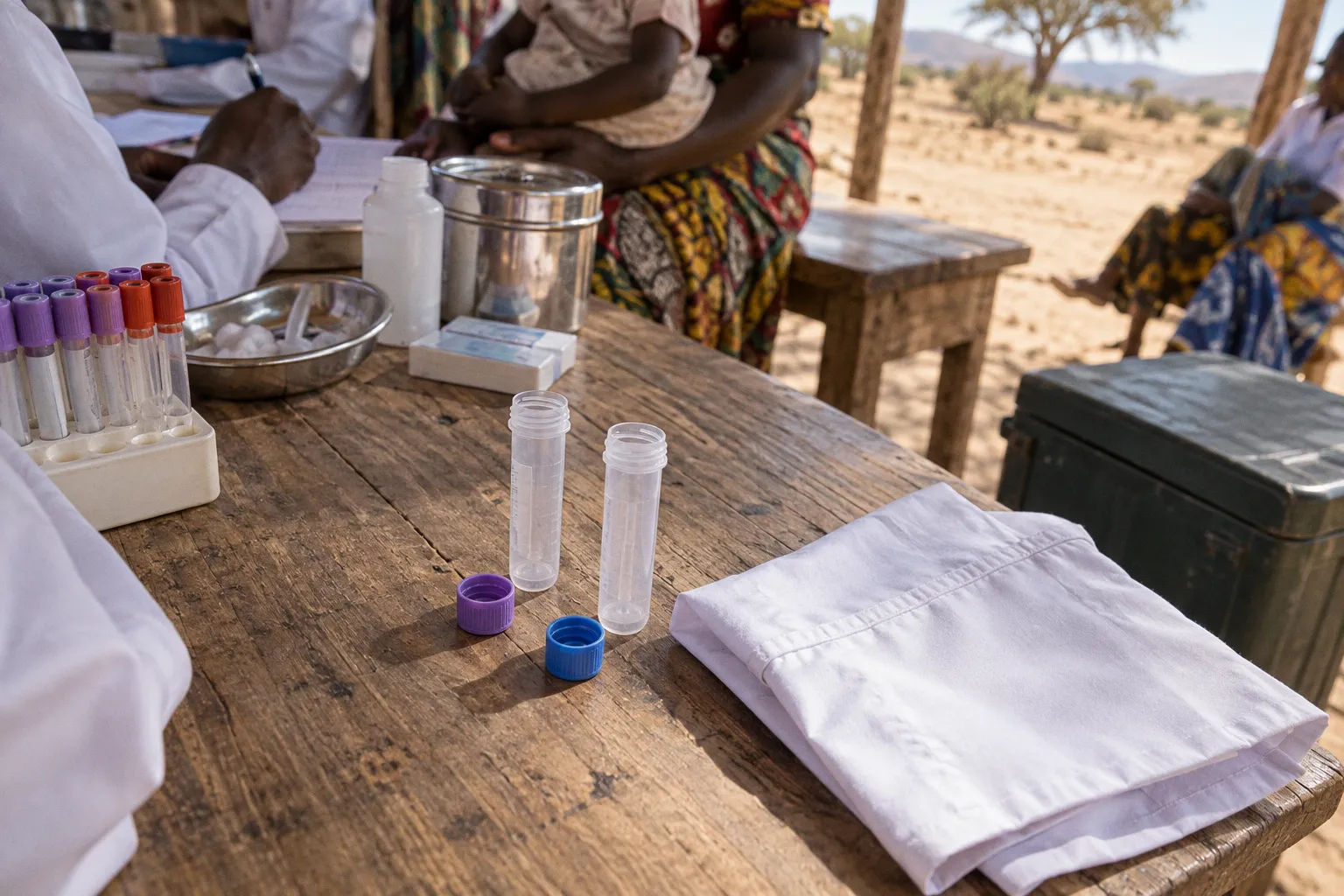
The Kenya Medical Laboratory Technicians and Technologists Board (KMLTTB) derives its statutory authority from Cap 253A of the Laws of Kenya and regulates training institutions, laboratory programs, students, and practicing professionals.
That makes accreditation the first clinical question, not an administrative detail. A program that is not approved by KMLTTB cannot be treated as a reliable route to professional registration. Students must pass through a defined progression: enrollment in an approved institution, student indexing, supervised clinical attachment, board examination, registration, and continuing compliance through annual licensure and accredited Continuing Professional Development (CPD) points.
For students considering laboratory technician training programs in Kenya, the correct decision is therefore not based only on campus location, tuition, or advertised equipment. The decisive issue is whether the program produces an auditable chain of regulatory and clinical competence.
KMLTTB accreditation is the entry point
KMLTTB is responsible for regulating, supervising, and accrediting medical laboratory science training programs and institutions in Kenya. Its role extends beyond approving a course title. The Board assesses whether an institution can deliver training that meets national requirements and supports safe laboratory practice.
KMLTTB conducts annual accreditation assessments of training institutions. This matters because accreditation is not a permanent marketing label. Institutional capacity, staffing, laboratory infrastructure, clinical exposure, documentation, and quality systems must remain compliant.
A prospective student should treat the institution’s current approval status as a primary admission criterion. The relevant questions are specific:
- Is the institution approved by KMLTTB for the exact laboratory program being advertised?
- Does the institution have a functioning laboratory for practical instruction rather than only classroom teaching?
- Does the training pathway include supervised clinical attachment?
- Is the institution able to complete the student-indexing process?
- Does it maintain the operational and student records required by the regulator?
- Can it explain how graduates proceed to board certification and registration?
A vague answer is a control failure. A credible institution should be able to describe its regulatory status, student documentation, clinical placement process, and examination pathway without presenting accreditation as an unverified claim.
Approved institutions must submit student and operational returns to KMLTTB at the end of March and September each year, as well as when presenting students for board indexing. These reporting obligations create an operational test for institutional maturity. A training college that cannot manage its own regulatory returns is poorly positioned to manage student progression, clinical records, or quality documentation.
Accreditation is not the same as advertising approval. It is evidence that the institution remains accountable to a professional regulator.
The trainee lifecycle: indexing, attachment, examination, registration
The route from admission to clinical practice has several control points. Each one protects the integrity of the workforce and reduces the risk of unqualified practice.
1. Admission to an approved program
The first control is institutional and program approval. Students should verify the status of the specific laboratory training program rather than relying on the reputation of a parent institution or a broad claim that the college offers health sciences.
A college may provide nursing, community health, or other medical courses while having a separate status for laboratory training. The relevant approval must apply to the laboratory program itself.
The program’s practical capacity also requires scrutiny. Laboratory competence cannot be developed through lectures alone. Students need structured exposure to specimen handling, analytical procedures, result interpretation, biosafety, documentation, and quality control. The exact curriculum may vary by qualification level, but the principle is constant: diagnostic practice must be observed, supervised, and documented.
2. Student indexing
Student indexing connects the trainee to the regulator’s professional oversight system. Approved institutions are required to file student returns with KMLTTB, including when presenting students for board indexing.
Indexing should not be treated as a clerical formality. It establishes that the student is progressing through a recognized training route. Problems at this stage can compromise later examination and registration steps.
Students should retain documentation related to:
- admission into the approved program;
- institutional registration;
- indexing submission and confirmation;
- clinical attachment placement;
- attendance and competency records;
- examination eligibility;
- completion of required practical training.
The institution carries reporting responsibilities, but the student should maintain an independent record. Regulatory problems become difficult to resolve when the only evidence exists in an informal conversation with an admissions office.
3. Supervised clinical attachment
Clinical attachment is where technical knowledge is tested against real laboratory workflows. It is also where protocol adherence becomes measurable.
A strong attachment should expose trainees to the complete pre-analytical, analytical, and post-analytical sequence:
1. Pre-analytical control: patient and specimen identification, collection requirements, labeling, transport, rejection criteria, and biosafety.
2. Analytical control: specimen processing, method execution, equipment use, internal quality control, and recognition of invalid runs.
3. Post-analytical control: result verification, documentation, communication of critical findings, and appropriate escalation.
The diagnostic yield of a laboratory depends on all three phases. A technically correct assay cannot compensate for an incorrectly labeled specimen. A well-collected sample does not guarantee a valid result if the analytical process lacks quality control. A correct result can still create clinical risk if it is delayed, transcribed incorrectly, or released without appropriate verification.
For students interested in accredited lab training for mission hospitals, the clinical environment is particularly relevant. Mission facilities may serve geographically dispersed communities and operate with constrained staffing, variable infrastructure, or limited access to referral laboratories. Training must therefore include disciplined specimen referral, equipment maintenance, stock management, and documentation. Compassionate intent does not replace process control. Patient outcomes depend on both.
4. Board certification examination
After completing the required training pathway, candidates proceed toward the KMLTTB board certification examination. The Board releases examination results within 30 working days after the examination is administered.
That timeline is operationally relevant for graduates, institutions, and employers. It provides a defined interval for planning registration, employment, and further supervised practice. It does not remove the need for candidates to meet all eligibility requirements before sitting the examination.
The exact pass-mark cut-offs should not be assumed. They are not established in the available regulatory information and should be confirmed through current KMLTTB communications or the institution’s official examination guidance.
5. Registration and professional practice
Passing an examination is not the end of the compliance pathway. Registered medical laboratory technicians and technologists must maintain professional standing through annual licensure requirements, including accredited CPD points.
The result is a continuing professional model rather than a one-time qualification. Diagnostic technology changes. Quality standards change. Digital systems introduce new documentation and data-governance requirements. A laboratory professional who does not update competence can become non-compliant even after completing initial training.
What an accredited program should teach beyond bench technique
Laboratory training is often described through procedures: microscopy, testing, specimen processing, or equipment operation. Those skills are necessary but incomplete. A clinically reliable technician must understand how laboratory results enter a patient-care system.
The training environment should connect bench work to four broader domains.
Pre-analytical reliability
Many laboratory errors occur before the specimen reaches the analyzer or microscope. Training should address:
- correct patient identification;
- appropriate specimen type and volume;
- collection timing;
- contamination prevention;
- labeling and accessioning;
- transport conditions;
- storage and stability;
- specimen rejection and recollection procedures.
These are not peripheral tasks. They determine whether the sample is fit for analysis. A high-performing analyzer cannot recover diagnostic value from a compromised specimen.
Analytical competence
Analytical training should include method principles, limitations, controls, calibration, equipment use, maintenance, and troubleshooting. Students should understand the distinction between a result that is technically generated and a result that is analytically valid.
Point-of-care diagnostics require the same discipline. Rapid or decentralized testing can shorten the interval between testing and clinical action, but speed does not eliminate the need for operator competence, quality control, lot management, documentation, and referral pathways for equivocal or complex cases.
This is central to healthcare worker diagnostic skills enhancement. A nurse, clinician, or community health worker may operate a point-of-care device, but the surrounding system must define training, authorization, supervision, result recording, and escalation. Diagnostic decentralization without quality governance simply moves risk closer to the patient.
Post-analytical safety
A laboratory result is clinically useful only when it is interpreted and communicated within an appropriate workflow. Training should therefore cover:
- result verification;
- transcription and reporting controls;
- turnaround-time monitoring;
- critical-result communication;
- confidentiality;
- correction of amended reports;
- referral of tests that exceed local capacity.
In a Catholic health network or other community healthcare system, this has direct implications for continuity of care. A test may be performed in one facility, reviewed by another professional, and acted on at a referral hospital. Weak documentation at any point can interrupt that chain.
Professional conduct and accountability
Clinical laboratory practice is governed by more than technical skill. Trainees must work within scope, document accurately, protect patient information, and escalate uncertainty. A culture that rewards unrecorded workarounds creates hidden morbidity risk.
Training institutions should demonstrate the behaviors they expect from students. If quality control logs are incomplete, equipment maintenance is undocumented, or corrective actions are discussed but not recorded, students learn that compliance is cosmetic. That is the opposite of laboratory diagnostic quality assurance training.
ISO 15189:2022 and the twelve QMS essentials
Kenyan medical laboratory training increasingly aligns technical and quality competence with ISO 15189:2022 management standards and twelve Quality Management System essentials. Students do not need to become auditors during initial training, but they must understand the operational logic of a quality management system.
A QMS is not a folder of policies. It is the control architecture that makes laboratory performance reproducible.
The twelve essentials are commonly understood through interconnected domains such as organization, personnel, equipment, purchasing and inventory, process management, information management, documents and records, customer service, assessment, occurrence management, continual improvement, and facilities and safety. The exact institutional presentation may differ, but the practical objective is stable: every critical process should have an owner, a defined method, a record, and a mechanism for corrective action.
Why QMS competence belongs in technician training
A trainee who knows how to run an assay but cannot identify a reagent lot, interpret a control failure, or document a nonconformity is not fully competent. The laboratory’s diagnostic output depends on the entire process.
A practical training program should expose students to:
- standard operating procedures and document control;
- internal quality control and review of control trends;
- external quality assessment where applicable;
- equipment calibration, maintenance, and downtime records;
- reagent expiry and stock rotation;
- nonconformity reporting;
- root-cause analysis;
- corrective and preventive action;
- incident escalation;
- biosafety and waste management;
- audit preparation and continual improvement.
The goal is not bureaucratic volume. The goal is traceability. When a result is challenged, the laboratory must be able to reconstruct what happened: who performed the procedure, which method and reagent were used, whether controls were acceptable, what equipment status applied, and how the result was released.
In laboratory medicine, quality is not an additional department. It is the condition under which every reported result becomes clinically defensible.
Training capacity and the East African diagnostic environment
Medical laboratory capacity building in East Africa is often discussed as a question of equipment. Equipment is visible, measurable, and easy to procure. Competence is less visible and more difficult to sustain.
A functioning diagnostic service requires the interaction of:
- trained personnel;
- reliable power and environmental conditions;
- equipment maintenance;
- reagent and consumable supply;
- quality control;
- referral networks;
- information systems;
- supervision;
- continuing professional development.
A college that displays modern analyzers but cannot explain maintenance, calibration, stock continuity, or practical supervision may offer less effective training than a smaller institution with disciplined processes.
For students evaluating medical training colleges in Kenya, the practical question is whether the learning environment mirrors a controlled laboratory. They should look for evidence that students are taught to identify failure modes rather than merely complete procedures.
Examples include:
- What happens when an internal control is out of range?
- Who authorizes a repeat test?
- How are rejected specimens documented?
- How are critical results communicated?
- What is the escalation pathway when equipment fails?
- How are referred specimens tracked?
- How are errors reviewed without erasing the original record?
These questions test operational competence. They also reveal whether the institution understands laboratory medicine as a patient-safety function rather than a collection of isolated technical tasks.
Foreign-trained professionals: recognition requires a local compliance pathway
Professionals trained outside Kenya cannot assume automatic recognition of their qualifications. Candidates seeking registration must satisfy local requirements, including a minimum probation period of 12 months in a Class D or higher medical laboratory and submission of a signed logbook report.
The probationary period is a structured assessment of local practice. It provides an opportunity to evaluate whether the professional can work within Kenyan regulatory expectations, documentation systems, laboratory classifications, and quality requirements.
The signed logbook is therefore substantive evidence, not a form to complete retrospectively. It should document the activities performed, the level of supervision, and the progression of competence during the probation period.
Foreign-trained candidates should establish, before entering the process:
- which documents KMLTTB requires for qualification review;
- where the probation may be completed;
- how the laboratory’s Class D or higher status is confirmed;
- who is authorized to supervise and sign the logbook;
- which activities must be documented;
- how and when the completed logbook is submitted.
The 12-month minimum is a regulatory requirement. It should not be replaced by informal employment, unsupervised work, or an undocumented period of service.
CPD is part of clinical competence, not a renewal ritual
Annual licensure depends on accredited CPD points. This creates a professional obligation that continues after board certification and initial registration.
The most useful CPD is linked to actual diagnostic risk. A technician working in a facility expanding antigen testing may require updated training in kit verification, quality control, result interpretation, and referral criteria. A professional working in a high-volume laboratory may need focused development in turnaround-time management, nonconformity analysis, or information-system controls.
A rational CPD plan should answer three questions:
1. Which diagnostic processes create the greatest current risk?
2. What competency gap is affecting protocol adherence or result reliability?
3. How will improvement be documented after training?
Certificates alone are weak evidence of competence. Effective CPD should produce observable changes: fewer documentation errors, stronger control review, better specimen rejection practice, faster escalation of critical results, or improved audit performance.
For Catholic healthcare institutions, CPD also supports workforce continuity. Community hospitals frequently depend on a limited number of skilled staff. Structured development reduces reliance on individual memory and makes clinical standards transferable across facilities.
How students should evaluate a program before enrollment
A disciplined evaluation can be completed without treating the decision as a consumer ranking exercise. The objective is to establish whether the program supports a valid regulatory and clinical pathway.
Students should request evidence in five areas:
1. Regulatory status
Confirmation that the institution and the specific laboratory program are approved by KMLTTB.
2. Student progression
A clear explanation of indexing, institutional reporting, clinical attachment, examination eligibility, and registration.
3. Clinical exposure
Details of where supervised attachment occurs, how competency is assessed, and how logbooks are managed.
4. Quality-system training
Evidence that ISO 15189:2022 concepts and QMS essentials are integrated into practical instruction, not mentioned only in promotional material.
5. Post-qualification compliance
Guidance on board certification, annual licensure, CPD points, and professional documentation.
The strongest institutions will provide process information rather than rely on general claims about employability. They will explain how students are tracked, how practical performance is assessed, and how regulatory submissions are managed.
Tuition information is relevant, but it should not dominate the decision. The available regulatory information does not establish a standardized fee structure across public and private Catholic medical training colleges in Kenya. Prospective students should obtain current institutional figures directly and compare them against the actual clinical and regulatory services included.
The operational standard for a credible program
The most reliable laboratory technician training programs in Kenya are not defined by a single piece of equipment or an attractive course title. They are defined by process integrity.
A credible program:
- operates under KMLTTB approval;
- maintains current institutional compliance;
- indexes students through the recognized pathway;
- provides supervised clinical attachment;
- trains students in pre-analytical, analytical, and post-analytical controls;
- embeds ISO 15189:2022 and QMS principles;
- documents practical competence;
- prepares graduates for board certification;
- explains annual licensure and CPD obligations;
- treats diagnostic quality as a patient-safety requirement.
This is the standard that supports laboratory capacity building across Kenya and the wider East African region. It is also the standard required for mission hospitals that need staff capable of delivering reliable diagnostics under real operational constraints.
The decision facing a prospective student is therefore straightforward, even if the verification work is not: select the program with the clearest evidence of regulatory approval, supervised practice, documented competence, and sustained quality management. In clinical diagnostics, a recognized pathway is not merely the safest route to a career. It is the first control in the patient’s chain of care.